How Digital Forensics Actually Helps the Average Alaskan

Helpful Resources and Reporting Information
- FTC guidance: Back up your digital life
- FBI Internet Crime Complaint Center (IC3)
- FTC ReportFraud
- If someone is in immediate danger, call 911. For a non-emergency crime, contact your local law enforcement agency.
Digital Forensics, in Plain Language
“Digital forensics” sounds like a federal case. In everyday life, it means carefully examining digital information to help answer a question your phone, laptop, or online account cannot answer for you.
What happened to messages that disappeared? Is a screenshot genuine? What online accounts did a relative use before they died? Does someone’s online identity check out? These are ordinary questions, not necessarily police matters, and not always questions you can resolve on your own.
Digital evidence can be delicate. Sometimes useful information remains in an account, backup, or another device. Sometimes it does not. The goal is to find out what can be established, preserve what is lawfully accessible, and be honest about what remains unknown.
The Situations This Actually Covers
The messages that disappeared
You need to know what was said, but a conversation is gone. Depending on the service and device, related information might still exist in a backup, cloud sync, archived conversation, another device, or records retained by a provider. Availability varies, and a provider may not release protected records without legal process.
There are no guarantees of recovery. Encryption, device settings, deletion, and whether data was overwritten can make recovery impossible. A careful review can help determine what may still be available without promising that missing messages will return.

The screenshot that might not be real
In a family dispute, online harassment situation, or disagreement, someone may show you a screenshot of a message and claim a particular person sent it. A screenshot can be useful, but by itself it may not establish who created or sent the message.
Context matters: the original file or conversation, timestamps, surrounding messages, and other available records can help clarify what the screenshot does, and does not, show. If information may be reviewed by an attorney or another professional, authenticity and proper handling matter.
After someone dies
A spouse, parent, or child dies, and the family discovers that messages, photos, financial records, or online accounts are inaccessible. Start with the provider’s own process for deceased users or authorized representatives. Requirements vary, but providers may ask for documentation such as a death certificate and proof of legal authority.
A lawful review may help organize and document information the family can access, or build a timeline from existing records. It cannot bypass account security or force a provider to release material. Act promptly: accounts may be closed, and some stored information may no longer be available later.

The online relationship that does not add up
A family member is communicating with someone online, but details about that person seem inconsistent. Lawful research may help check whether publicly available information supports the person’s claims. It may also identify gaps that need further verification.
An investigator cannot compel a platform to identify an account holder or guarantee an identification. If deception or money requests are part of your concern, see “The Relationship Was the Scam”. This article does not repeat that post’s guidance on romance scams.
Someone stopped responding and it does not add up
A digital trail may show the last known contact or other details that help clarify a timeline. It may not show why someone stopped responding, where they are now, or whether they are safe. Information available through private accounts is not automatically available to a family member or investigator.
If you believe someone is missing or in danger, contact law enforcement first. Digital research is not a replacement for a missing-person report or an emergency response.
A dispute where a phone or laptop is evidence
A device or account history may matter in a family, employment, contract, or financial dispute. Reviewing material that you lawfully possess can sometimes help document what is known and when.
Access must be lawful: through ownership, consent, or other proper authority. An investigator will not access a spouse’s phone or private account without authorization. Trying to do so can create new legal problems and undermine your position. If access rights are unclear, consult an attorney before taking action.
What Digital Forensics Is Not
Digital forensics is not hacking. It is not permission to enter another person’s accounts or devices, a guarantee that deleted data can be recovered, or a way to monitor a partner without lawful authority. It does not replace law enforcement in a criminal matter.
A private investigator also cannot compel a platform to release protected records. Obtaining records that are not publicly available or lawfully held by you may require legal process through an attorney or court.
Why Time Matters
Accounts can be closed. Providers may retain information for limited periods. Devices can be lost, reset, wiped by an update, or changed accidentally. Apps with disappearing-message settings may remove content automatically. Delay can mean that information once available is no longer there.
If something might matter later, preserve it now. Do not delete messages, “clean up” the device, or reset it. Keep originals when possible, and avoid making unnecessary changes before you understand what information may be important.
This article is general information, not legal advice. If you are involved in an active legal matter, speak with a qualified attorney promptly; preservation obligations may apply.
What You Can Do
These practical steps are not a substitute for legal advice:
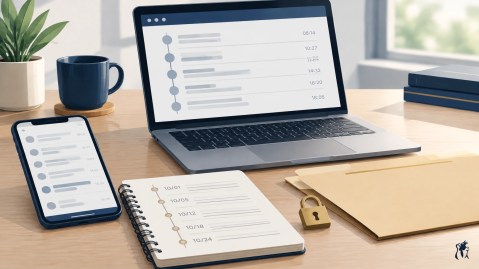
- Preserve before deleting. Keep original files and messages when possible. Screenshots can help, but they may not show the full context.
- Write down what you remember. Note dates, devices, accounts, and what you did, while the details are fresh.
- Keep access credentials organized. Use only accounts and devices you are authorized to access.
- Do not try to enter another person’s account or device. Ask an attorney about access rights if you are unsure.
- Use the platform’s own support or legal process for account access, preservation, or deceased-user requests.
- Report urgent or criminal conduct to the appropriate authorities. Call 911 for an emergency; use local law enforcement’s non-emergency number otherwise. For internet crime, you can submit a report to IC3.
Alaska Considerations
Alaska’s distances and connectivity differences can mean fewer nearby in-person technical services and greater reliance on what can lawfully be reviewed remotely. Phones also carry a growing share of everyday life, from school and banking to medical and family communication, so important information may exist digitally.
In smaller communities, privacy matters. A careful, discreet, documented process may be more useful than a rushed or broad review.
What a Private Investigator Can, and Cannot, Do
Where lawfully directed, an investigator can organize and document material a client is authorized to provide, research publicly available information about an online identity, check claims against independent sources, and create a timeline from available records. A written report should distinguish confirmed information from inference.
An investigator cannot hack, enter another person’s account without lawful authority, obtain protected phone, bank, medical, or platform records without legal process, guarantee recovery of deleted information, recover money, or promise a particular outcome. This work must be lawful and documented, and is subject to state licensing requirements.
Frequently Asked Questions
What is digital forensics in plain terms?
It is a careful review of digital information (such as messages, files, or account records) to answer a specific question. The review is limited by what exists and what you are legally authorized to access.
Can deleted text messages really be recovered?
Sometimes, and often not. The answer depends on backups, provider retention, device condition, encryption, and whether the information has been overwritten. No one can guarantee recovery in advance.
My ex has my photos or messages on their phone. Can an investigator get them?
Not without lawful authority. An investigator cannot access another person’s phone or private account simply because the information concerns you. Speak with an attorney about your options.
Someone died and I need access to their accounts. What can I do?
Contact each provider through its process for deceased users or authorized representatives. Be prepared to provide documentation the provider requests. An investigator cannot compel account access or make a provider release records.
Is this a police matter or a private investigation matter?
Emergencies, threats, suspected crimes, and exploitation of a minor belong with law enforcement first. Call 911 for immediate danger. A private investigator may help document lawfully accessible information in a non-emergency situation but does not replace police.
General Information
This article is for general information only, not legal advice. Rules for digital evidence, privacy, device and account access, and preservation vary by jurisdiction and situation. Consult a qualified attorney about a specific matter. Alaska Investigations Group is not a law firm or law enforcement, cannot compel records or subpoena documents, and does not guarantee results.
Sources
- FTC: Back up your digital life
- FBI Internet Crime Complaint Center (IC3)
- FTC ReportFraud
- Google: Request information about a deceased user’s account
- Apple: Request access to a deceased family member’s Apple Account
Investigative Support
Alaska Investigations Group has more than 10 years of professional investigative experience. Where appropriate and lawful, our services include digital intelligence, review of lawfully accessible information, and professionally documented findings. We cannot compel records, subpoena documents, or guarantee recovery or results, and we cannot accept every request.
Licensed Private Investigations Agency in Anchorage, Alaska. License 1126. Serving statewide except Fairbanks.
For a confidential, no-obligation consultation, request a consultation or call (907) 232-4731.


