How Digital Forensics Actually Helps the Average Alaskan

Helpful Resources and Reporting Information
- FTC guidance: Back up your digital life
- FBI Internet Crime Complaint Center (IC3)
- FTC ReportFraud
- If someone is in immediate danger, call 911. For a non-emergency crime, contact your local law enforcement agency.
Digital Forensics, in Plain Language
“Digital forensics” sounds like a federal case. In everyday life, it means carefully examining digital information to help answer a question your phone, laptop, or online account cannot answer for you.
What happened to messages that disappeared? Is a screenshot genuine? What online accounts did a relative use before they died? Does someone’s online identity check out? These are ordinary questions, not necessarily police matters, and not always questions you can resolve on your own.
Digital evidence can be delicate. Sometimes useful information remains in an account, backup, or another device. Sometimes it does not. The goal is to find out what can be established, preserve what is lawfully accessible, and be honest about what remains unknown.
The Situations This Actually Covers
The messages that disappeared
You need to know what was said, but a conversation is gone. Depending on the service and device, related information might still exist in a backup, cloud sync, archived conversation, another device, or records retained by a provider. Availability varies, and a provider may not release protected records without legal process.
There are no guarantees of recovery. Encryption, device settings, deletion, and whether data was overwritten can make recovery impossible. A careful review can help determine what may still be available without promising that missing messages will return.

The screenshot that might not be real
In a family dispute, online harassment situation, or disagreement, someone may show you a screenshot of a message and claim a particular person sent it. A screenshot can be useful, but by itself it may not establish who created or sent the message.
Context matters: the original file or conversation, timestamps, surrounding messages, and other available records can help clarify what the screenshot does, and does not, show. If information may be reviewed by an attorney or another professional, authenticity and proper handling matter.
After someone dies
A spouse, parent, or child dies, and the family discovers that messages, photos, financial records, or online accounts are inaccessible. Start with the provider’s own process for deceased users or authorized representatives. Requirements vary, but providers may ask for documentation such as a death certificate and proof of legal authority.
A lawful review may help organize and document information the family can access, or build a timeline from existing records. It cannot bypass account security or force a provider to release material. Act promptly: accounts may be closed, and some stored information may no longer be available later.

The online relationship that does not add up
A family member is communicating with someone online, but details about that person seem inconsistent. Lawful research may help check whether publicly available information supports the person’s claims. It may also identify gaps that need further verification.
An investigator cannot compel a platform to identify an account holder or guarantee an identification. If deception or money requests are part of your concern, see “The Relationship Was the Scam”. This article does not repeat that post’s guidance on romance scams.
Someone stopped responding and it does not add up
A digital trail may show the last known contact or other details that help clarify a timeline. It may not show why someone stopped responding, where they are now, or whether they are safe. Information available through private accounts is not automatically available to a family member or investigator.
If you believe someone is missing or in danger, contact law enforcement first. Digital research is not a replacement for a missing-person report or an emergency response.
A dispute where a phone or laptop is evidence
A device or account history may matter in a family, employment, contract, or financial dispute. Reviewing material that you lawfully possess can sometimes help document what is known and when.
Access must be lawful: through ownership, consent, or other proper authority. An investigator will not access a spouse’s phone or private account without authorization. Trying to do so can create new legal problems and undermine your position. If access rights are unclear, consult an attorney before taking action.
What Digital Forensics Is Not
Digital forensics is not hacking. It is not permission to enter another person’s accounts or devices, a guarantee that deleted data can be recovered, or a way to monitor a partner without lawful authority. It does not replace law enforcement in a criminal matter.
A private investigator also cannot compel a platform to release protected records. Obtaining records that are not publicly available or lawfully held by you may require legal process through an attorney or court.
Why Time Matters
Accounts can be closed. Providers may retain information for limited periods. Devices can be lost, reset, wiped by an update, or changed accidentally. Apps with disappearing-message settings may remove content automatically. Delay can mean that information once available is no longer there.
If something might matter later, preserve it now. Do not delete messages, “clean up” the device, or reset it. Keep originals when possible, and avoid making unnecessary changes before you understand what information may be important.
This article is general information, not legal advice. If you are involved in an active legal matter, speak with a qualified attorney promptly; preservation obligations may apply.

What You Can Do
These practical steps are not a substitute for legal advice:
- Preserve before deleting. Keep original files and messages when possible. Screenshots can help, but they may not show the full context.
- Write down what you remember. Note dates, devices, accounts, and what you did, while the details are fresh.
- Keep access credentials organized. Use only accounts and devices you are authorized to access.
- Do not try to enter another person’s account or device. Ask an attorney about access rights if you are unsure.
- Use the platform’s own support or legal process for account access, preservation, or deceased-user requests.
- Report urgent or criminal conduct to the appropriate authorities. Call 911 for an emergency; use local law enforcement’s non-emergency number otherwise. For internet crime, you can submit a report to IC3.
Alaska Considerations
Alaska’s distances and connectivity differences can mean fewer nearby in-person technical services and greater reliance on what can lawfully be reviewed remotely. Phones also carry a growing share of everyday life, from school and banking to medical and family communication, so important information may exist digitally.
In smaller communities, privacy matters. A careful, discreet, documented process may be more useful than a rushed or broad review.
What a Private Investigator Can, and Cannot, Do
Where lawfully directed, an investigator can organize and document material a client is authorized to provide, research publicly available information about an online identity, check claims against independent sources, and create a timeline from available records. A written report should distinguish confirmed information from inference.
An investigator cannot hack, enter another person’s account without lawful authority, obtain protected phone, bank, medical, or platform records without legal process, guarantee recovery of deleted information, recover money, or promise a particular outcome. This work must be lawful and documented, and is subject to state licensing requirements.
Frequently Asked Questions
What is digital forensics in plain terms?
It is a careful review of digital information (such as messages, files, or account records) to answer a specific question. The review is limited by what exists and what you are legally authorized to access.
Can deleted text messages really be recovered?
Sometimes, and often not. The answer depends on backups, provider retention, device condition, encryption, and whether the information has been overwritten. No one can guarantee recovery in advance.
My ex has my photos or messages on their phone. Can an investigator get them?
Not without lawful authority. An investigator cannot access another person’s phone or private account simply because the information concerns you. Speak with an attorney about your options.
Someone died and I need access to their accounts. What can I do?
Contact each provider through its process for deceased users or authorized representatives. Be prepared to provide documentation the provider requests. An investigator cannot compel account access or make a provider release records.
Is this a police matter or a private investigation matter?
Emergencies, threats, suspected crimes, and exploitation of a minor belong with law enforcement first. Call 911 for immediate danger. A private investigator may help document lawfully accessible information in a non-emergency situation but does not replace police.
General Information
This article is for general information only, not legal advice. Rules for digital evidence, privacy, device and account access, and preservation vary by jurisdiction and situation. Consult a qualified attorney about a specific matter. Alaska Investigations Group is not a law firm or law enforcement, cannot compel records or subpoena documents, and does not guarantee results.
Sources
- FTC: Back up your digital life
- FBI Internet Crime Complaint Center (IC3)
- FTC ReportFraud
- Google: Request information about a deceased user’s account
- Apple: Request access to a deceased family member’s Apple Account
Investigative Support
Alaska Investigations Group has more than 10 years of professional investigative experience. Where appropriate and lawful, our services include digital intelligence, review of lawfully accessible information, and professionally documented findings. We cannot compel records, subpoena documents, or guarantee recovery or results, and we cannot accept every request.
Licensed Private Investigations Agency in Anchorage, Alaska. License 1126. Serving statewide except Fairbanks.
For a confidential, no-obligation consultation, request a consultation or call (907) 232-4731.
The Relationship Was the Scam: How Romance Fraud Actually Works, and What Actually Helps

If Money Has Moved
Contact your bank, credit union, card issuer, wire service, or payment app immediately. Ask what steps may be available to stop or dispute the transaction. Then report the fraud to the FBI’s Internet Crime Complaint Center and the FTC’s ReportFraud site. Preserve messages, profiles, receipts, transaction records, and account details.
Do not pay anyone who promises to recover the money for a fee. The FBI’s 2025 Internet Crime Report recorded 10,516 recovery-scam complaints and approximately $1.4 billion in reported losses. The FBI notes that this figure may include losses from the original fraud as well as losses to the follow-on scam. FBI 2025 Internet Crime Report
If an adult has stopped responding, a romance scam does not automatically mean that person is missing. A missing-person report is not the tool for reporting a romance fraud. Start with the financial institution and reporting channels above.
The Relationship Was Part of the Fraud
In a romance scam, the relationship is not a prelude to the fraud. The relationship is the fraud. A person can lose money, but also a source of companionship, a future they believed in, and the ability to grieve openly when they learn the relationship was manufactured.
This article explains how the connection is built, how requests for money develop, and what steps can help. It does so without blaming or belittling anyone who has been targeted.
How the Connection Is Built
These contacts may begin with a dating-app message or a direct message on social media. The FTC reports that nearly 60% of romance-scam reports in 2025 began on social media platforms. FTC data
The profile may use stolen photos and an invented identity. A plausible-sounding job (such as military service, medicine, engineering, offshore work, or the merchant marine) can help explain why the person is supposedly far away or difficult to meet. Daily messages can grow familiar over weeks or months. The person learns about your routines, family, worries, and hopes.
Declarations of affection may come quickly. So can talk of a shared future. But plans to meet remain just out of reach: a deployment, work assignment, travel problem, or sudden emergency always intervenes.
Some fraud schemes are run by teams, sometimes working from scripts or taking shifts. That can produce small inconsistencies: a changed detail, a different communication style, or a story that does not quite line up. A team can manage many conversations at once. FTC imposter-scam trends

When the Request Comes
The request is often shaped to feel urgent and personal: a medical emergency, a fee to release a package of personal effects, a plane ticket to finally visit, a temporary problem with a bank account, or a crisis involving a relative.
The story may change. The pattern to watch is urgency, secrecy, and an unusual payment method, such as gift cards, cryptocurrency, a wire transfer, or a payment to someone else.
A useful rule is simple: someone you have never met in person asking you for money is a serious red flag, whatever the explanation. Pause. Do not send money or share financial information while you verify the person independently.
When It Is Not About Investing
A romance scam can involve escalating requests for money without ever mentioning an investment platform or cryptocurrency. That is different from pig butchering, a romance scam with an investment payload attached. For that related variant, see “Pig Butchering: The Money Trail Is Public and the Money Still Disappears”.
Another variation is sextortion: someone uses intimate material or the threat of exposure to demand money or further compliance. A person threatened this way has done nothing wrong. Do not pay or negotiate. Preserve the messages and other evidence, report the threats, and tell someone you trust. Support services can help alongside reporting.
A scammer may also threaten to contact your family or employer when you try to leave. Those threats can feel isolating, but you do not have to handle them alone.
Why It Can Happen to Anyone
The feelings in a fraudulent relationship can still be real. The care, anticipation, and grief may be genuine even when the person behind the profile was not who they claimed to be. Published reporting has described the painful reality that someone can recognize a person is not real and still feel attached. Associated Press reporting published by the Anchorage Daily News
Isolation, grief, a recent loss, or a major life transition can make connection especially important. None of these makes someone foolish. Shame is useful to the scammer: people who fear being judged may wait to report, lose time to contact their financial institution, or keep the situation from people who could support them.
Stages You Can Check
Consider whether the contact has involved several of these signs:
- Intense affection or commitment very early.
- Repeated refusal or failure to meet in person or have a normal live video call.
- Small requests that make giving money feel routine.
- Emergencies that seem to resolve only after you send funds.
- A shift toward gift cards, cryptocurrency, wires, or payments to third parties.
- Requests to keep the relationship or money secret from family and friends.
- A promised meeting that repeatedly falls through at the last moment.
One sign alone does not establish fraud. A repeated pattern, especially requests for money paired with secrecy and failed plans to meet, deserves careful attention.

The Reported Losses
The FTC says U.S. consumers reported approximately $1.48 billion in romance-scam losses in 2025, a 22% increase over 2024. The median reported loss was $2,020 per victim. Nearly 60% of reported romance scams began on social media. FTC data
The FBI recorded $929.3 million across 23,159 complaints in its broader Confidence/Romance category in 2025. That category is not directly comparable to the FTC’s romance-scam figures. The FBI’s reporting also describes higher median losses among people aged 55–64, reaching approximately $9,000 per incident; this is a reported pattern, not a prediction about any individual. FBI figures summarized by BrightChosen
For an Alaska data point, the FBI’s report recorded 3,202 IC3 complaints from Alaska across all cybercrime categories in 2025; that total is not a romance-scam count. FBI 2025 Internet Crime Report
Two 2026 Reports
Military.com reported that police described an alleged romance-scam pattern involving a 69-year-old disabled veteran who was allegedly defrauded of $120,000. The report did not state an outcome. Military.com, October 1, 2026
In June 2026, The Standard reported that a retired Hong Kong woman lost approximately HK$1.6 million to a scammer posing as a military doctor who claimed he needed money for retirement fees and airfare. The Standard
What to Do Now
If you have not sent money: Stop. Before confronting the person, preserve the profile, messages, contact details, and any payment requests. A confrontation may prompt them to delete or change information. The evidence matters more than the momentary satisfaction of an argument. Once you have saved what you can, disengage and block the account.
If you have sent money: Contact the financial institution or payment provider immediately, report to IC3 and the FTC, and save all records. Do not pay a recovery service or anyone who claims a fee will unlock or return your funds.
If someone is threatening exposure: Do not pay or negotiate. Save the threats, report them, and tell one trusted person. Sharing the situation can reduce the power of secrecy. If you are in emotional distress, support services are appropriate alongside reporting.
If someone close to you will not listen: Avoid opening with “You’re being scammed.” Ask how they know the person, what the plan is to meet, and whether you can verify the story together. Keep the door open. Seizing devices or issuing ultimatums can increase isolation.
What a Private Investigator Can, and Cannot, Do
Where lawfully directed, an investigator can research public and commercially available information about a claimed identity, photos, contact details, employer, credentials, or locations. An investigator can document communications, compare claims with independent sources, and prepare a written report that distinguishes confirmed facts from inferences.
An investigator cannot recover money, compel testimony or records, subpoena platform data, access private accounts without lawful authority, obtain law-enforcement files, or guarantee the identification of a scammer or any other outcome. Verification before money moves is more useful than investigation afterward. We cannot unsend money.
Frequently Asked Questions
How can I tell if someone I met online is real?
Look for independent verification, consistent information, and a willingness to meet safely in person or have a live video conversation. Repeated excuses, urgent requests for money, and demands for secrecy are warning signs. A profile or convincing conversation does not establish identity.
What should I do if I have already sent money to someone I met online?
Contact your financial institution or payment provider right away. Report the fraud to IC3 and the FTC, preserve records, and do not pay anyone promising recovery for a fee.
Someone is threatening to share pictures of me unless I pay. What should I do?
Do not pay or negotiate. Preserve the threats, report them, and tell someone you trust. You have done nothing wrong by being threatened; support services are available.
My parent is sending money to someone they met online and will not listen. What can I do?
Stay calm and curious. Ask about the person’s identity and plans to meet, and offer to verify the information together. Avoid ultimatums or taking devices, which may make your parent less willing to speak with you.
Can a private investigator find the person who scammed me?
Identification is not guaranteed, and a private investigator cannot promise recovery of funds. Lawful research and documented findings may help clarify what can be independently verified and organize information for review by a financial institution, attorney, or appropriate reporting agency.
General Information
This article is for general information only. It is not legal or financial advice. Fraud tactics change; contact the relevant agency and financial institution, and consult your own attorney as appropriate. Alaska Investigations Group is not a law firm and is not law enforcement.
Sources
- FTC: 2025 social-media scam losses and romance-scam findings
- FTC: Trends in reports about imposter scams
- FBI: 2025 Internet Crime Report
- FBI romance-scam figures summarized by BrightChosen
- Military.com: October 2026 report
- The Standard: Hong Kong romance-scam report
- Associated Press reporting published by the Anchorage Daily News
Investigative Support
Alaska Investigations Group has more than 10 years of professional investigative experience. Where appropriate and lawfully directed, we provide discreet identity and background research, digital intelligence, and written documentation. We cannot compel records, subpoena, recover funds, or guarantee results, and we cannot accept every request.
Licensed Private Investigations Agency in Anchorage, Alaska. License 1126. Serving statewide except Fairbanks.
For a confidential, no-obligation consultation about verifying an online identity before money moves or documenting what is known afterward, request a consultation, call (907) 232-4731, or email mrrems@protonmail.com. We are not law enforcement and cannot compel records or recover funds; no outcome is promised.
Pig Butchering: The Money Trail Is Public and the Money Still Disappears

If Money Has Moved, Act Now
Contact the bank, payment provider, or cryptocurrency exchange involved as soon as possible. Timing can matter.
Report suspected internet crime to the FBI’s Internet Crime Complaint Center and fraud to the FTC at ReportFraud.ftc.gov. Preserve the conversation and all transaction details.
No legitimate platform charges you a fee to release money you have invested. Do not pay one.
Cryptocurrency transactions can be recorded publicly and permanently. In a pig-butchering scam, that transparency may let someone follow transfers from one address to another. Yet victims often cannot get their money back.
Why can the trail be visible while recovery remains out of reach?
What Pig Butchering Means
The name describes a metaphor: a target is “fattened” with trust and apparent investment gains before the fraudsters take the money. The scheme is also called romance baiting or cryptocurrency investment fraud. It is usually a staged operation, not one clever message.
An approach might come through a wrong-number text, dating app, social media message, or a supposed mentor or relative who trades. Ordinary conversation builds familiarity. Investment talk arrives gradually. A fake platform may display supposed gains, and a small early withdrawal may work, lending the platform credibility. Then come larger deposits, and, eventually, a wall: the money cannot be withdrawn.
Often there is a second demand. The platform or its representative may request a withdrawal fee, tax, “unlock” payment, or “verification deposit” before releasing funds.
A demand for more money to release money already invested is a defining warning sign. Do not pay it.
In 2022, Alaska Investigations Group published a bulletin noting that this pattern was reaching Alaska from Cambodia: “Intelligence Bulletin: Cambodian Crypto-Romance Scam Targets Alaskans.”
Why Crypto Carries the Money
Cryptocurrency transfers generally do not have the familiar chargeback process associated with some card payments. Once sent, a transaction may be difficult or impossible to reverse through the network itself. Addresses are pseudonymous: a public ledger can show a transfer without naming the person who controls either address.
Funds may move from an exchange to an unhosted wallet, then across multiple addresses, services, and jurisdictions. The ledger records transactions; it does not automatically reveal who is behind an address, undo a transfer, or determine which court can order assets returned.
The complexity itself can help a fraud succeed. The U.S. Secret Service warns about pig-butchering schemes, and Assistant Special Agent in Charge Michael Peck described them as “the modern-day Ponzi scheme.” In published remarks, he also warned that random messages offering early access to an investment are fraudulent.

The Person Messaging You May Be Coerced
The person behind a profile may not be freely choosing to send the messages. In its February 2026 report, the UN human rights office estimated that at least 300,000 people from 66 countries were trafficked into forced labor in scam centers, primarily in Southeast Asia.
The report and the UN Office on Drugs and Crime describe recruitment through fraudulent overseas job offers, followed in some situations by debt bondage, confiscated passports, confinement in fortified compounds, and severe abuse. UNODC has called forced scamming one of the fastest-growing forms of human trafficking. The industry has adapted after raids, dispersing into smaller sites, rural areas, and new jurisdictions.
This does not lessen the harm to a person defrauded, make the money recoverable, or excuse the fraud. It does change what you should understand about who may be on the other end of the messages: there may be a coerced worker, not the person directing the operation.

Why Intelligent People Fall for It
This is not a gullibility scam. Blaming victims is wrong, and it can make people wait longer before telling someone or reporting what happened.
The relationship, not the investment pitch, is often the mechanism. Weeks of ordinary conversation can build a real emotional bond. A fabricated small win can feel like proof. The platform may look easy to use while the financial concept is difficult to assess. Meanwhile, a person may be experiencing isolation, grief, loneliness, financial pressure, or another major life change. Shame can make it harder to ask for help.
Published reporting in July 2026 described how emotional attachment can persist even when a person recognizes that a relationship may not be real. That reporting is referenced here without naming anyone and without retelling the individual’s story.
The Reported Losses
The FBI’s 2025 Internet Crime Report recorded nearly $21 billion in reported U.S. cyber-enabled crime losses. Investment complaints accounted for $8.6 billion; reporting on the report says investment scams represented 49% of scam-related incidents.
Alaskans reported nearly $40 million in cyber-enabled crime losses in 2025, the highest annual figure recorded for the state. About $18.6 million was tied to cryptocurrency, and confidence and romance fraud accounted for $7.1 million, according to the FBI’s Anchorage field office and Alaska reporting.
The Money Trail Is Public, and Still Not Enough
A September 2026 prosecution illustrates the gap between tracing funds and returning them. According to the Department of Justice, Vietnamese national Trung Nguyen Van, 37, was charged with money laundering. Prosecutors allege that one person transferred approximately $16 million in cryptocurrency between June and August 2024, believing it was being invested through a platform called “Triangle.” The complaint alleges that funds were moved to a private, unhosted wallet. The charges are allegations; Van is presumed innocent, and no outcome is reported.
The public ledger helped document transfers. But a transaction record is not a name, and tracing is not recovery. Funds can move among addresses and across services and jurisdictions. By the time investigators identify a relevant asset, the people controlling it, and the legal forum that could order its return, may be in different places.
Enforcement actions show that some assets can be restrained. The Secret Service reported in February 2026 that Scam Center Strike Force seizures of cryptocurrency topped $580 million. The Justice Department reported more than $700 million in cryptocurrency restrained by April 2026. Restraining funds is not the same as returning them to victims.
A 2026 Lawfare analysis of civil forfeiture describes both its potential and its limits: forfeiture can reach assets, but its usefulness depends on locating funds, establishing jurisdiction, and identifying a party against whom to proceed. It is not a general reimbursement program for victims.

If You Are Dealing With It Now
If no money has moved: Stop communicating, do not send money, and do not pay a fee to release supposed funds.
If money has moved: Contact the financial institution or exchange immediately. Record the receiving wallet address and transaction details. Report to IC3.gov and ReportFraud.ftc.gov.
Preserve the messages, profile, platform URL, wallet addresses, transaction hashes, deposit records, and related correspondence. Do not delete the conversation out of embarrassment. Losing the original messages can remove useful information.
Recovery cannot be promised. Anyone who guarantees recovery or demands payment to retrieve funds may be targeting you again. The FBI’s 2025 Internet Crime Report documents this as its own category: 10,516 recovery scam complaints in 2025, with $1.4 billion in reported losses. The FBI states plainly that it will never ask for payment to recover lost funds, and that it does not refer victims to companies that do.
Telling someone you trust, reporting the fraud, and seeking qualified emotional support are appropriate steps. Shame is understandable; it should not keep you isolated.
What a Private Investigator Can, and Cannot, Do
When lawfully directed by a client or their attorney, a private investigator can organize communications and transfer records; research platforms, domains, company names, payment addresses, and alleged operators using public and commercially available sources; and trace publicly visible blockchain activity to the extent possible. A written report can separate confirmed facts from allegations and inferences.
A private investigator cannot reverse a transaction, recover funds, seize or freeze assets, obtain protected bank or platform records without lawful authority or the account holder’s cooperation, access law-enforcement systems or files, impersonate someone to obtain information, or subpoena records. An investigator cannot promise a result.
No legitimate investigator promises recovery. We do not use “recovery” as a sales term.
Frequently Asked Questions
What is pig butchering, and where does the name come from?
It is a staged fraud in which trust and apparent investment gains are built over time before the victim’s money is taken. The name comes from the metaphor of fattening an animal before slaughter.
Why can’t public cryptocurrency transactions simply be reversed?
A public ledger shows transfers, but it does not identify the person behind every address or undo a transaction. Reversing or recovering funds may require cooperation, legal authority, and assets that remain reachable.
Who may be sending the messages?
Some people working in scam centers may have been trafficked and coerced into forced scamming. That does not reduce the harm to the person defrauded or guarantee that funds can be recovered.
What should I do first if I have already sent money?
Contact your financial institution or exchange immediately, preserve transaction and conversation records, and report to IC3 and the FTC.
Can a private investigator get my money back?
No. A private investigator cannot recover funds, freeze assets, or compel records. Lawful research and documentation may help organize what is known. Be cautious of anyone promising recovery.
Sources and General Information
- FBI 2025 Internet Crime Report
- FBI Anchorage: Alaska’s reported cybercrime losses
- Anchorage Daily News: Alaska’s 2025 reported losses
- Forbes: FBI report on investment scams
- U.S. Secret Service: Investment Fraud and Pig Butchering
- Alaska’s News Source: Secret Service warning and Michael Peck’s remarks
- OHCHR: “A Wicked Problem” report
- UNODC: “Forced to scam”
- U.S. Department of Justice: September 2026 charge announcement
- BleepingComputer: Reporting on the September 2026 charge
- U.S. Secret Service: February 2026 seizure announcement
- U.S. Department of Justice: April 2026 enforcement announcement
- Lawfare: Civil forfeiture’s limits and promise
- Anchorage Daily News: Published reporting on romance-scam experience
- FTC fraud reporting
This article is general information, not legal or financial advice. Scam methods, figures, and enforcement actions change. Contact the relevant agency, your financial institution, and your own attorney. Alaska Investigations Group is not a law firm and is not law enforcement. Readers dealing with emotional distress or coercion should consider appropriate support services as well as reporting.
Investigative Documentation
Alaska Investigations Group provides lawful research, digital intelligence, blockchain activity review using publicly visible information, and written documentation for individuals, families, businesses, and attorneys. The firm has more than 10 years of professional investigative experience.
Licensed Private Investigations Agency in Anchorage, Alaska. License 1126. Serving statewide except Fairbanks.
We cannot compel records, subpoena, seize or freeze assets, promise recovery, or guarantee any outcome. We cannot accept every request.
For a confidential, no-obligation consultation about documenting what is known about a suspected investment or romance fraud, platform, or payment trail, request a consultation, call (907) 232-4731, or email mrrems@protonmail.com.
When the Investigation Has to Fly In: How a Remote Alaska Village Case Actually Works

An operation that would be ordinary in a city can become extraordinary in Alaska when the investigation has to reach a village with no road connection.
Investigators may need to fly in simply to interview people who knew someone, confirm a timeline, understand local routines, or preserve information that cannot be understood from a distant office. What actually happens when an investigation has to go where the road does not?
Before anything else, remember three practical points:
- There is no waiting period to report a missing person in Alaska.
- Ask which agency is leading the matter and obtain a case number.
- Preserve messages, call logs, photographs, travel records, and other relevant information instead of deleting or altering them.
For a broader first-step resource, see Missing in Alaska: What to Do in the First 48 Hours.
Why Go to the Village?
The reason is not investigative preference. It is that the people, routines, local knowledge, and last sightings are there.
A person’s life in a village may be legible locally in a way it never is from a city office. Neighbors may understand customary travel routes. Community members may know which homes, boats, trails, work sites, or gathering places matter. Someone who appears difficult to locate from a database may be immediately recognizable to people who know the local context.
Interviews are usually more useful when they happen where the person lived, worked, traveled, or was last seen. In a community of a few hundred people, many relevant witnesses may be located in the same place. That does not make the investigation simple. It makes the local context essential.
The Jurisdiction Puzzle
Rural Alaska investigations can involve overlapping authority. The U.S. Government Accountability Office describes criminal jurisdiction in Alaska as concurrent between the state and tribes. Under Public Law 280, the state holds primary responsibility, while tribes retain inherent authority to prosecute tribal citizens within their villages. Federal jurisdiction is generally limited to crimes of general applicability. The GAO also concludes that more clarity is needed regarding concurrent criminal jurisdiction and funding opportunities. (GAO-26-107533)
This is a complexity problem, not automatically a blame problem.
Which agency leads can affect:
- Who travels to the village
- Which agency maintains the investigative file
- What resources are available
- Which legal process may be used
- How information is requested and preserved
- Which authority can make charging decisions
The agency that responds first is not necessarily the agency with authority to charge. Local response, tribal authority, state responsibility, and federal involvement are separate questions that may need to be clarified.

The Logistics Are the Investigation
Most rural Alaska communities do not connect to one another through a road network. Alaska State Troopers cover vast regions from hub posts and rely on aircraft or boats to reach many communities. The Alaska Department of Public Safety describes the Village Public Safety Officer program as a local presence that supports public safety in rural communities, including securing scenes and assisting with matters that may require trooper response. (GAO-26-107533; Alaska Department of Public Safety; Alaska State Troopers)
Weather can ground aircraft. Scheduled or chartered small aircraft have limits involving seats, baggage, daylight, and availability. Boats, skiffs, and snowmachines may be practical seasonal options, but they are not interchangeable with a road patrol vehicle.
A team may need to bring basic supplies, evidence-preservation materials, communications equipment, and enough personal gear to operate safely in a community where replacement supplies may not be readily available. Housing and private interview space may also be limited.
The result is simple but important: a two-hour interview may require a two-day travel operation.
A scene may need to be secured until the appropriate investigators arrive. A location may need to be preserved without a permanent officer stationed there. Local personnel, community members, tribal authorities, and state investigators may each have different roles in protecting information and maintaining continuity.
This is why early reporting and early preservation matter so much in rural matters. A delay may be structural rather than negligent. The aircraft may not be able to fly. The available boat may be committed elsewhere. Weather may close the route. The appropriate personnel may be based in another hub.
Distance changes the timeline.
Who Actually Shows Up?
The exact response varies by community, available personnel, and the nature of the matter.
Alaska State Troopers provide primary law-enforcement coverage across large rural regions from hub locations. They may travel by aircraft or boat when a matter requires a response beyond the local community. (GAO-26-107533; Alaska State Troopers)
Village Public Safety Officers provide local presence in communities where they serve. Their responsibilities can include handling misdemeanors, responding to local concerns, securing scenes, and coordinating with troopers. (Alaska Department of Public Safety)
Local or tribal police may respond where those departments exist. Their authority and responsibilities vary by community.
Federal agencies may provide support where federal authority or a federal mission applies. The U.S. Marshals Service describes its work as including fugitive apprehension, prisoner transport, and investigative support for other agencies, including in remote locations. Federal process may also provide tools, such as subpoenas, that a local agency does not have in a particular matter. (U.S. Marshals Service)
Responding first and having authority to charge are not the same thing. Those roles must be identified rather than assumed.
Why a Ruling Is Not a Closing
The State Medical Examiner determines cause and manner of death for deaths that fall within its statutory responsibilities. The State Medical Examiner’s Office investigates sudden, unexpected, unnatural, suspicious, unusual, or unexplained deaths and may conduct an examination or autopsy. (State Medical Examiner’s Office; 7 AAC 35.310)
Under Alaska Statutes Title 12.65.020, the medical examiner prepares a report of findings and conclusions. If those findings indicate that the death may have been caused by criminal means, the report is submitted to the responsible district attorney. If an inquest is warranted, the medical examiner or prosecutor may petition the court for one. Otherwise, a death certificate is completed and filed. (Alaska Statutes § 12.65.020)
A medical cause-of-death classification does not, by itself, determine criminal liability.
An investigation can remain open after a medical finding. “No evidence of a crime at this time” and “the case is closed” are different statements. One describes the evidence or conclusion currently available. The other describes the status of the investigative file.
Families can and sometimes do publicly challenge an official account of a death. Reporting by Alaska Public Media illustrates that this occurs. A family’s disagreement with a finding is not itself evidence of criminal conduct, and a medical finding is not itself a final conclusion about another person’s legal liability. (Alaska Public Media)
What Open Actually Means
An investigation may remain open because:
- A question remains unanswered
- The timeline is incomplete
- Laboratory or analysis work is pending
- A witness has not been located
- Jurisdiction still needs clarification
- Investigators are preserving the file while an issue remains unexplained
An open file does not automatically mean a hidden crime exists. It also does not mean that nothing has been done.
Remote investigations can remain active because the process requires more time, more travel, more coordination, or additional information. The status should be understood directly from the lead agency rather than inferred from silence.
What Families and Communities Should Know
Report immediately. Do not wait for a required number of hours; Alaska has no waiting period for reporting a missing person. Ask who the lead agency is and obtain a case number. (Alaska Investigations Group resource)
Ask what the medical examiner’s finding covers and what it does not. Keep one point of contact for the family and maintain a written log containing the agency, contact person, date, case number, and information exchanged.
Preserve messages, call logs, photographs, travel records, notes, and other potentially relevant materials. Do not delete accounts, discard devices, alter records, or publish unverified accusations.
Tribal councils and community organizations often coordinate locally and may be important sources of communication and support. A family does not need to hire anyone in order to report a missing person or request that a matter be investigated by an agency with jurisdiction.
What a Private Investigator Can, and Cannot, Do
A private investigator may, when directed by a family or attorney and when the objective is lawful:
- Research public and commercially available records
- Corroborate a lead against independent sources
- Verify whether a person is incarcerated, hospitalized, deceased, or has moved
- Assemble a documented timeline from records
- Prepare a report separating confirmed fact from claim
A private investigator cannot:
- Compel a person to cooperate
- Subpoena records
- Access phone, bank, medical, or account records without lawful authority
- Obtain law-enforcement databases or investigative files
- Impersonate law enforcement
- Promise an outcome
In most matters, the primary investigation belongs with the agency that has jurisdiction. Private work supplements that process; it never replaces it. In a remote matter, the logistics that make an agency’s job difficult also make a private effort harder, not easier.
Alaska Investigations Group has more than 10 years of professional investigative experience. Licensed Private Investigations Agency in Anchorage, Alaska. License 1126. Serving statewide except Fairbanks. The firm is not law enforcement and does not have law-enforcement authority, affiliation, or access to investigative files or databases.
Frequently Asked Questions
Why would investigators travel to a remote village instead of working the case from a city?
Because the witnesses, routines, local context, and last-known activity are there. Interviews and location-based verification may be more reliable when conducted in the community rather than from a distant office.
Who has authority over a death investigation in rural Alaska?
Authority may involve the state, a tribe, or, in limited circumstances, the federal government. The GAO describes concurrent criminal jurisdiction, with the state holding primary responsibility under Public Law 280, tribal authority continuing in certain circumstances, and federal jurisdiction generally limited to crimes of general applicability. (GAO-26-107533)
Does a medical examiner’s finding close a case?
No. The finding establishes medical conclusions about cause and manner of death. It does not, by itself, determine criminal liability. A file may remain open after the finding, and “no evidence of a crime at this time” is not the same statement as “the case is closed.” (Alaska Statutes § 12.65.020)
How long does an investigation into a death take in a remote area?
There is no universal timeline. Weather, aircraft availability, distance, witness availability, laboratory work, jurisdiction, medical examiner procedures, and the amount of unresolved information can all affect the process. (State Medical Examiner’s Office; GAO-26-107533)
Can a private investigator obtain law-enforcement files or compel records?
No. A private investigator cannot obtain law-enforcement investigative files or compel records and persons without lawful authority. The investigator cannot substitute for the agency with jurisdiction.
Sources
- GAO-26-107533: Tribes in Alaska
- Alaska Department of Public Safety: Village Public Safety Officers
- Alaska Department of Public Safety: Alaska State Troopers
- Alaska State Medical Examiner’s Office
- Alaska Statutes § 12.65.020
- 7 AAC 35.310
- U.S. Marshals Service: What We Do
- Alaska Public Media: Family Challenges Official Account of a Death
- ProPublica and Anchorage Daily News: Alaska Village Law Enforcement Reporting
General Information Disclaimer
This article provides general information only and is not legal advice. Investigative practice, jurisdiction, reporting obligations, records access, and medical examiner procedure vary by situation and may change. Readers should contact the agency with jurisdiction, their own attorney, and, where relevant, their tribal government.
Alaska Investigations Group is not a law firm and is not law enforcement. The firm cannot compel records or persons, cannot subpoena records, does not have access to law-enforcement files or databases, and does not guarantee any result. Private investigative support does not replace an agency investigation or legal advice.
Confidential Consultation
Families and their attorneys who want to understand what lawful investigative support could or could not contribute to a documented review may request a confidential, no-obligation consultation, call (907) 232-4731, or email mrrems@protonmail.com. Alaska Investigations Group cannot accept every request.
Chain of Custody Explained: Why Records Win Cases and Lose Them

You can have an authentic document, recording, device, or physical item and still be unable to rely on it later.
The problem may not be that anyone faked it. The problem may be that nobody can explain what happened to it during the four days it sat on a desk, moved between accounts, or remained accessible to other people.
This article is about custody, not genuineness. How to Verify a Document Before You Trust It asks whether an item is genuine, who issued it and whether its origin can be confirmed. This article asks a different question:
Can you prove who held the item, when it moved, where it went, and whether it could have changed?
Start Preserving Early
Preservation begins when a dispute is reasonably foreseeable, not when a lawsuit is filed or someone finally asks for the evidence.
Stop deleting. Stop re-saving. Stop tidying. Start logging.
Record what you received, when you received it, where it came from, and who handled it. A short, contemporaneous record is usually more useful than a confident reconstruction months later.
What Chain of Custody Means
Chain of custody is the documented, unbroken account of an item’s possession from the moment it was created or collected to the moment it is reviewed, transferred, or presented.
It normally records:
- What the item is.
- When and where it was collected or received.
- Who possessed it.
- How it was transferred.
- Where it was stored.
- What was done to it.
- Whether any change was made.
Chain of custody is not the same as authentication. Authentication concerns whether an item is what its proponent claims it is. Custody provides the practical history used to support that conclusion.
This matters far beyond criminal proceedings. Chain-of-custody problems arise in insurance claims, employment disputes, contract disagreements, internal investigations, family matters, regulatory reviews, and civil litigation.
This is a business and legal reality. It is not merely a courtroom formality.
The Four Questions That Matter
A reliable custody record must answer four questions.
1. Identity
Is this the same item that was collected?
Can you identify it from its label, file structure, serial number, hash, packaging, or other recorded characteristics?
2. Integrity
Is the item in the same condition?
If it changed, can you explain when, why, how, and by whom?
3. Continuity
Is there any period when possession is unaccounted for?
A missing handover, unexplained storage period, or absent transfer record creates uncertainty.
4. Access
During any gap, who could have touched, opened, edited, copied, moved, or deleted the item?
A chain does not become reliable because three links are excellent. It fails at the weakest of the four.
The Rules That Actually Govern
Under Federal Rule of Evidence 901(a), authentication is a condition precedent to admissibility. In general terms, the proponent must provide evidence sufficient to support a finding that the item is what the proponent claims it is. Federal Rule of Evidence 901
Federal Rule of Evidence 1002 generally addresses the original-writing rule: when a party is proving the content of a writing, recording, or photograph, the original is ordinarily required unless an exception applies. Rule 1003 generally permits a duplicate to the same extent as the original unless a genuine question is raised about the original’s authenticity or admitting the duplicate would be unfair. Federal Rules of Evidence 1002 and 1003
A gap in the chain does not automatically make evidence inadmissible. When there is sufficient testimony or other foundation to support a finding of authenticity, an ordinary gap generally goes to the weight the factfinder gives the evidence rather than its admissibility.
But the opposite extreme is also wrong. Exclusion remains possible when a foundational link is missing or the chain is so compromised that the item cannot be shown to be reliable.
The result depends on the facts, the law, and the forum. State rules may differ from the federal rules. A court, arbitrator, insurer, or regulator may apply different procedures. This is general information, not legal advice, and no outcome should be predicted from this article.
What Breaks a Chain in Practice
Most custody failures are ordinary and human. That is precisely why they are dangerous.
Someone passes an item to a colleague without recording the date, reason, or recipient. A scan replaces the original. A file is re-exported, renamed, converted, or re-saved, and nobody records what happened.
A device is wiped. An inbox is cleaned. A folder is reorganized. Surveillance footage, dashcam clips, or cloud backups expire under a fixed retention cycle while everyone assumes the material is safe.
A shared company login, family plan, or drive makes it impossible to say who accessed a record. A laboratory test consumes a sample without a documented protocol or retained portion. A legitimate annotation or conversion occurs, but nobody records who made the change.
Storage can also alter material. Sync tools may reformat a drive. Applications may compress an upload. Platforms may strip metadata.
The record is what separates an ordinary mistake from an unanswerable question.
Why Digital Evidence Is Different
Digital evidence authentication presents additional problems.
Copies can be perfect. A duplicate and an original may look identical while being legally different items with different histories.
The original may not be in your possession. It may remain with a platform, carrier, cloud provider, or other third party that you do not control.
The handler may be an automated system. No person may have manually opened or moved the file. Courts may therefore consider whether a reliable process produced the record, sometimes described generally as a “silent witness” approach.
Metadata can change invisibly. A transfer, upload, re-save, or screenshot may alter or remove metadata while leaving the visible text or image unchanged.
A screenshot is not the underlying record. It is a picture of the record. It typically removes the metadata and system information that might have helped show where the content came from, when it existed, and how it was handled.

Where Authentication Gets Decided
In United States v. Vayner, 769 F.3d 125 (2d Cir. 2014), the Second Circuit addressed a printed social-media profile offered as the defendant’s profile. The court held that the government had not supplied sufficient evidence to establish that the defendant created or controlled the page. The page’s existence was not enough to establish its connection to the defendant. United States v. Vayner
In United States v. Belt, Nos. 24-3265 and 24-3296 (8th Cir. May 15, 2026), the Eighth Circuit considered automatically generated home-security-camera footage containing gaps ranging from seconds to more than 22 minutes. The majority affirmed admission under the circumstances presented, treating the gaps and possible tampering primarily as issues for the factfinder to weigh. A dissent questioned whether the foundation was sufficient because the record did not adequately establish the camera, software, operating process, or reasons for the missing segments. United States v. Belt, official Eighth Circuit opinion
These decisions illustrate the same practical point. Neither issue depended on proving deception. The issue was what could, and could not, be shown about the item.
What to Do Before You Need It
Start the log when the item is received, not when the dispute begins.
Record the date, time, source, transfer method, and people present. Use one consistent transfer form and one custody log for the matter. Record internal handovers, not only transfers to outside parties.
Keep the original where you have it. Work from a copy. Label the copy as a copy.
Do not clean up, tidy, delete, cancel, deactivate, reformat, or reset anything once a matter is live or reasonably foreseeable. The instinct to tidy up is often the single most damaging one.
Photograph or export with context: the full screen, date, account, thread, surrounding messages, and visible source information. Do not capture only the isolated sentence or image.
Where file integrity matters, generate a hash at collection and record it in the log. In plain terms, a hash is a digital fingerprint for a file. A matching hash supports the conclusion that the file has not changed since the hash was taken. It does not prove that the content is accurate, truthful, or complete.
Preserve the device and account. Preserve lawful access information securely so the material remains retrievable. Record who had access during any gap, even when the answer is embarrassing or inconvenient.
A documented imperfection is far better than an undocumented gap.
For Organisations
Organisations need a policy layer, not just individual effort.
Name the person responsible for custody. Use one transfer log. Store items in a way that does not alter them. Set retention and destruction rules that do not conflict with a preservation obligation. Reconcile the IT instinct to optimize storage with the need to preserve original material.
A common failure occurs when the person who knows where everything is leaves, and the record leaves with them.

The Record Is the Product
What you can prove about an item’s history is often worth more than the item itself.
The central question is not simply whether a file, document, photograph, recording, or physical sample appears genuine. The question is whether you can explain its identity, integrity, continuity, and access from collection through presentation.
That is what makes evidence more defensible. That is what clarifies what holds up in court, without predicting what any particular court will decide.
Frequently Asked Questions
What is chain of custody in plain terms?
It is the written history of an item: who had it, when they had it, where it went, how it was stored, and what happened to it.
Does a gap in the chain always make evidence inadmissible?
No. A gap generally affects the weight of evidence when there is still enough foundation to support a finding that the item is authentic. Exclusion remains possible when a foundational link is missing or the chain is so compromised that reliability cannot be established. Courts decide admissibility under the facts and law of the particular matter.
Is a screenshot good enough?
A screenshot may preserve what was visible on a screen, but it is not the underlying record. It may omit metadata, account information, surrounding content, timestamps, system information, and the original file. Preserve the native record and related context whenever possible.
Do I need a hash, and what is one in plain terms?
A hash is a fingerprint calculated from a file. If the file changes, the hash normally changes. A matching hash helps show that the file has not changed since the hash was taken. It does not prove that the content is true or accurate.
What should I do first if I realise something may matter later?
Stop, preserve, log, and do not clean anything up. Record what you have, when you received it, where it came from, and who handled it. Then consult your attorney about the legal preservation requirements that apply to your situation.
About Alaska Investigations Group
Alaska Investigations Group provides confidential investigative documentation, digital intelligence, evidence preservation assistance, research, and litigation support. The firm has more than 10 years of professional investigative experience and handles assignments individually, with attention to documentation, lawful procedures, confidentiality, and professional review.
Licensed Private Investigations Agency in Anchorage, Alaska. License 1126. Serving statewide except Fairbanks.
General Information Disclaimer
This article is provided for general informational purposes only. It is not legal advice, legal representation, forensic advice, or a guarantee that any item will be authenticated, admitted, excluded, or given a particular weight.
The rules of evidence, authentication, admissibility, retention, preservation, privacy, and data access vary by jurisdiction and by forum, including courts, arbitration proceedings, insurers, and regulators. Courts decide admissibility on the facts and law of the case before them. Readers should consult their own attorney and, where relevant, their insurer, regulator, or counsel before relying on information in this article.
Alaska Investigations Group is not a law firm and does not provide legal advice. Alaska Investigations Group is not law enforcement. The firm cannot compel records or subpoena documents. No outcome is promised or guaranteed.
Sources
- Federal Rules of Evidence, U.S. Courts: Rules 901, 1002, and 1003
- United States v. Vayner, 769 F.3d 125, Second Circuit, 2014
- United States v. Belt, Nos. 24-3265 and 24-3296, Eighth Circuit, May 15, 2026
- How to Verify a Document Before You Trust It
Request a Confidential Consultation
For businesses, attorneys, and organisations that need evidence documented, preserved, or reviewed, request a confidential, no-obligation consultation.
Phone: (907) 232-4731
Email: mrrems@protonmail.com
Scams That Follow the Uniform: What Targets Service Members at JBER and Other Installations

Start With the Right Resources
If you are handling a housing, payment, benefits, or message-related concern, begin with a source you find independently, not a phone number, link, or email address supplied in the suspicious communication.
For housing concerns connected to Joint Base Elmendorf-Richardson, the Military Housing Office is the correct point of contact:
- Email: 673CES.CEH@elmendorf.af.mil
- Phone: (907) 552-4439
- JBER PCS and housing information
- JBER housing resources
For suspected fraud, the relevant reporting resources include:
- FTC ReportFraud.ftc.gov
- FTC IdentityTheft.gov
- FBI Internet Crime Complaint Center
- Your financial institution’s fraud department
- Your chain of command, legal assistance office, or appropriate military support office
JBER, its command, and its housing office are not implicated in the fraud schemes described in this article. Installation officials and military units routinely publish consumer and housing warnings so service members and families can verify information before acting.
The Pattern Is Pressure
Fraud aimed at service members is not random. It tends to appear when you are acting under a deadline, managing a transition, or trying to make an important decision without being able to verify the details in person.
A permanent change of station, or PCS, is the clearest example.
You may be arranging housing from another state. You may be reviewing a lease while coordinating travel, school, transportation, and household logistics. You may be expected to make a deposit quickly because someone claims other applicants are waiting.
That pressure is exactly what scammers exploit.
Most landlords, property managers, listings, military retailers, healthcare contractors, and people contacting service members are legitimate. The issue is not that every contact is fraudulent. The issue is that a legitimate-looking contact still has to be independently verified.
Why Alaska Adds Friction
JBER in Anchorage and Fort Wainwright in Fairbanks sit in a state where distance can make ordinary verification more difficult. A service member may be searching remotely, dealing with a smaller and geographically dispersed housing market, and facing substantial travel time before personally inspecting a rental.
That combination (deadline pressure, remote search, upfront payment, and limited ability to walk through a property) creates an opportunity for fake listings.
The FTC’s July 13, 2026 consumer alert explains that scammers may invent housing that is not for rent, advertise property that does not exist, or steal photographs from legitimate listings and repost them elsewhere at below-market rent. When they cannot provide access to the property, they invent excuses for why you cannot tour it. Read the FTC alert.
Fake Rentals During a PCS
The mechanics are straightforward:
- A property appears online at an attractive price.
- The photographs look professional because they were copied from a legitimate listing.
- The person claiming to be the landlord says they are traveling or unavailable.
- You are pressured to send a deposit before seeing the property.
- Payment is requested by cash, gift card, cryptocurrency, or wire transfer service.
Those payment methods are serious red flags. The FTC warns that payment through a gift card, cryptocurrency, or wire service is difficult to reverse once sent. The Army Criminal Investigation Division has also warned that rental scammers use below-market pricing, hijacked advertisements, nonexistent properties, false military discounts, and urgency aimed at service members during PCS moves. Review the Army CID rental-scam warning.
Named installation resources show how verification should work:
- Fort Stewart: Army CID rental-scam lookout material is published on the installation website and warns about fake listings, copied photographs, and below-market pricing.
- Joint Base Lewis-McChord: Its housing guidance recommends checking a management company or LLC through state licensing and Secretary of State records before paying. Read the JBLM guidance.
- Fort Wainwright: The Housing Division requires service members to report to the Housing Services Office for a briefing before signing a rental or sales agreement. The office provides housing referrals, lease reviews, and landlord-tenant mediation. Review Fort Wainwright Housing Division resources.
- JBER: JBER’s installation and Air Force housing pages publish PCS and housing guidance. Those resources, not an unverified online contact, are the proper starting point for housing questions.
Before you pay:
- Search the rental address online.
- Compare the same property across multiple listings.
- Tour it in person, or have someone you trust inspect it.
- Confirm the identity of the owner or management company.
- Check relevant state business or licensing records.
- Ask the housing referral office for assistance.
- Never pay a deposit by gift card, cryptocurrency, or wire transfer service.

Exchange Impersonation
In September 2026, the Army & Air Force Exchange Service warned the Fort Gordon military community about fraudulent emails and text messages impersonating the Exchange. At least one reported email used the subject line “My Wishlist.” The warning advised recipients not to click links, open attachments, or share account or payment information. Read the Fort Gordon report.
The underlying AAFES issue was installation-independent. Suspicious messages reached military customers wherever they were. AAFES said it was investigating messages sent through email and push notifications from its official app, including a “My Wishlist” link attributed to an “AAFES Security Team.” AAFES did not state where the messages originated or whether customer data had been compromised. Review the DefenseScoop report.
Fort Gordon is named only because the Exchange warned that community specifically. That warning does not suggest that Fort Gordon, its command, or its personnel were responsible for the messages.
TRICARE Impersonation
The most current advisory addressed in this article is TRICARE’s October 6, 2026 warning about impersonation scams by phone, text, email, or message. Scammers may claim that payment is required or that coverage will expire.
TRICARE and its contractors do not call or text to collect payment, offer discounts, or request personal identifying information. Do not share information or open links from an unknown message. Verify through a phone number or website you already know is legitimate. Report suspected fraud to your TRICARE contractor or the DHA Office of Inspector General through TRICARE fraud resources. Read the October 6 advisory.
Debt Relief and Predatory Lending
An August 2026 Army Echoes notice warned that debt-relief scammers may pose as military banks, credit unions, or credit bureaus. They may promise special military debt forgiveness while demanding an upfront fee.
Debt-relief companies are prohibited from charging fees before providing debt-relief services. The Army notice recommends contacting your actual lender directly and researching any organization before sharing information or paying money. Read the Army Echoes warning.
The Federal Trade Commission has reported that military-connected consumers filed more than 99,000 fraud complaints in recent years, resulting in $584 million in losses. Those figures are attributed to FTC reporting, not to a claim that every military community experienced the same level of loss. See related reporting.
Crypto Investment Fraud and "Pig Butchering"
Investment fraud is now the most damaging category of fraud aimed at military households, and cryptocurrency is where most of the money goes.
The mechanism has a name. "Pig butchering" describes a scam that begins with a relationship, not a pitch. The contact may come through a dating app, a social media message, or what looks like a wrong number. Weeks of ordinary conversation follow. Then comes the introduction: a relative or a mentor who "trades crypto," a platform that shows gains, and a small initial withdrawal that works exactly as promised. The platform is fake. The gains are fabricated. The one small withdrawal exists to demonstrate that the money is real.
There is no documented case we were able to source in which a specific U.S. military installation is the identified venue for a pig-butchering prosecution, and we are not going to invent one. What is documented is the targeting: service members and military families are attractive to these operations because of steady pay, a stable income that supports larger transfers, a respected identity that scammers borrow, and frequent life transitions — a deployment, a PCS, a new posting in an unfamiliar place — that interrupt the normal network of people who would otherwise ask questions.
The scale, per FTC reporting and published reporting on it, is significant: military-connected consumers filed more than 99,000 fraud complaints in the relevant period, with $584 million in reported losses, and victims of crypto investment fraud have reported a median loss of approximately $230,000. Those figures are attributed to FTC reporting, not to a claim that every military household experienced the same level of loss.
What to take from this: the relationship is the delivery mechanism, and the verification that defeats it is the same one that defeats every other scheme in this article. Look up the platform yourself, through a source you found independently. If a person you have never met in person introduces an investment opportunity, the opportunity is the fraud.
Signals worth taking seriously:
- The introduction comes from someone you met online, not a licensed financial professional.
- The platform was recommended by a person, never by a regulator or an established brokerage.
- A small withdrawal works, which is presented as proof the platform is real.
- You are encouraged to borrow from family, take out a loan, or use a crypto ATM to invest more.
- Any request to move money through cryptocurrency, gift cards, or a crypto ATM.
Romance Fraud and the “Good Samaritan” Scam
These are different mechanisms.
In romance fraud, the scammer creates an emotional relationship and then requests money for a fabricated need. Army CID warns that criminals frequently impersonate U.S. Soldiers on dating sites and social media, using stolen photographs and identities. Common stories involve transportation, medical costs, communication expenses, or other service-related needs. CID advises never sending money to someone known only online and suggests requesting contact from a .mil address as one verification step. Read the TRADOC warning and Army CID guidance.
A separate documented case involved a soldier stationed at Fort Liberty who was convicted and sentenced in 2024 to 40 months in federal prison for orchestrating romance scams that defrauded victims of more than $350,000. This was an established conviction, not an accusation. No individual is identified here. Stars and Stripes coverage.
The “Good Samaritan” scam turns generosity into access. In a July 2 incident reported in Norfolk, Virginia, two men approached a sailor in a parking lot and claimed they needed help paying for a hotel. After receiving the sailor’s phone under the pretext of entering reimbursement information, they used his banking app to transfer thousands of dollars. The incident was reported in a Norfolk parking lot, not on a naval installation. The practical warning is simple: do not hand an unlocked phone to a stranger. Offer to make the call yourself. Military Times report.
When the Fraud Comes From Inside the Gate
Most of this article is about schemes arriving from outside a base. One documented case moved in the other direction, and it belongs here because it shows how access and records become the vulnerability.
Fort Cavazos (Texas). A former Army sergeant and his spouse were convicted in a multimillion-dollar fraud scheme run out of Killeen, Texas. According to reporting by Stars and Stripes, KWTX, and Courthouse News Service, the couple used access to military personnel records to enroll more than 800 soldiers in the Army's Mass Transportation Benefit Program without those soldiers' knowledge. Between 2014 and 2020, the fraudulent subsidies were routed into a company the couple controlled. The former sergeant was sentenced to three years in federal prison; his spouse received five years of probation. This was an established conviction, not an accusation, and no individual is identified here.
The instructive point, which is the reason the case is in this article: the scheme was not defeated by a suspicious payment. It was defeated by records — enrollment records, benefit payment records, and a mismatch between the two that emerged over years rather than hours. That is the same lesson as the rest of this article, at a different address.
Access is not the only thing that makes a base community exposed. A base is a place where large numbers of people arrive without local knowledge, where housing is arranged remotely and quickly, where a new member may not yet know which local businesses are real, and where a uniform makes a scam that borrows military identity more convincing to everyone outside the gate. Those are structural conditions rather than failures of any installation, its command, or its personnel.
Alaska Court-Text Scams
On September 23, 2026, the U.S. District Court for the District of Alaska warned of an increase in unsolicited text messages impersonating government officials or agencies. Some messages threaten legal action or demand payment connected to supposed fines, tickets, or court matters.
The court states plainly that it will never call or text to request payment of fines. Read the District of Alaska alert.
What to Do
Use a measured process:
- Slow down. Refuse same-day pressure when the request involves money, account access, or sensitive information.
- Verify independently. Use a website, phone number, or office contact that you found yourself.
- Do not use gift cards, cryptocurrency, or wire transfers for a rental deposit or unexpected payment request.
- Preserve the record. Photograph or save messages, listings, receipts, payment confirmations, and correspondence rather than deleting them.
- Contact your financial institution immediately if money moved or account access may have been exposed.
- Report the matter to your chain of command, financial institution, the FTC at IdentityTheft.gov and ReportFraud.ftc.gov, and the FBI at IC3.gov.
- For a JBER housing concern, contact the Military Housing Office at 673CES.CEH@elmendorf.af.mil or (907) 552-4439.
Verification is slower. It is also the step that reliably separates a legitimate transaction from an unverified demand.
Frequently Asked Questions
Why are service members targeted during a PCS move?
PCS moves combine deadlines, remote housing searches, changing addresses, and pressure to secure a lease quickly. Army CID and the FTC identify those conditions as factors that can make service members vulnerable to rental fraud. FTC · Army CID
How can I check whether a rental listing is real when I cannot visit in person?
Search the address, compare listings, verify the owner or management company through state records, and ask someone you trust to tour or inspect the property. Use the housing referral office at the gaining installation. FTC · JBLM guidance
Does TRICARE ever call or text me about payment?
No. TRICARE and its contractors do not call or text to collect payment, offer discounts, or request personal identifying information. Verify through a known legitimate TRICARE channel. TRICARE
What should I do if I think I have already sent money to a scammer?
Contact your financial institution immediately, preserve the messages and transaction records, notify your chain of command as appropriate, and report the matter through the FTC and FBI reporting channels listed above. No reporting process guarantees that money will be recovered.
Who should I contact about a housing concern at JBER?
Contact the JBER Military Housing Office at 673CES.CEH@elmendorf.af.mil or (907) 552-4439. The office is the correct housing resource and is not implicated in any fraud described here. JBER housing resources
General Information
This article is general information, not legal advice or financial advice. It is not a substitute for guidance from your chain of command, legal assistance office, financial institution, TRICARE contractor, housing office, or other relevant agency. Scam tactics change, and readers should verify current information directly with the agency or organization involved.
Sources
- FTC: How to Spot Fake Rental Listings During a Military Move
- Fort Stewart Army CID Rental Scam Lookout
- Joint Base Lewis-McChord: Avoiding Rental Scams
- Fort Wainwright Housing Division
- JBER PCS and Moving Resources
- JBER Housing Resources
- Fort Gordon Exchange Warning
- DefenseScoop: AAFES Suspicious Messages
- TRICARE Scam Advisory
- TRICARE Fraud Resources
- Army Echoes: Debt Relief Scams
- Military.com Reporting on Military Debt Scams
- Military.com: Military Families Lose Hundreds of Millions to Scams Each Year
- Military Consumer: With people losing big to investment scams, learn how to spot and avoid them
- Army Times: Rampant attempts to defraud troops warrants crack down, advocates say
- TRADOC Social Media Scams Warning
- Army CID Social Media Impersonation Warning
- Stars and Stripes: Fort Liberty Romance Scam Conviction
- Stars and Stripes: Former Army sergeant sentenced in rideshare fraud targeting Fort Cavazos soldiers
- KWTX: Killeen couple sentenced in fraudulent rideshare scheme targeting soldiers
- Military Times: Good Samaritan Scam in Norfolk, Virginia
- U.S. District Court for the District of Alaska: Text Message Scam Alert
Alaska Investigations Group
Alaska Investigations Group provides confidential, lawful investigative support for service members, families, legal professionals, and businesses with verification or documentation questions. Relevant services may include research projects, digital intelligence, background research, lawful documentation, and professional reporting.
Licensed Private Investigations Agency in Anchorage, Alaska. License 1126. Serving statewide except Fairbanks.
The firm has more than 10 years of professional investigative experience. Alaska Investigations Group is a private investigations agency, not a law firm and not law enforcement. It is not affiliated with JBER, Fort Wainwright, any other installation, military branch, or government agency. The firm does not replace law enforcement or the agency with jurisdiction, cannot compel records or subpoena documents, and promises no outcome.
For a confidential, no-obligation consultation, request a consultation or call (907) 232-4731. Email: mrrems@protonmail.com.
Gaming the Permit: How Alaska’s Fishing Quota System Gets Abused, and How It Gets Caught

Resources and Reporting
- Alaska Commercial Fisheries Entry Commission
- Alaska Public Media reporting on the Kodiak permit case
- KMXT reporting on alleged illegal permit transfers
- Alaska Beacon reporting
- Anchorage Daily News reporting
- U.S. Attorney’s Office indictment announcement
- Juneau Empire reporting on halibut sentencing
- Radio Kenai reporting on the indictment
- Anchorage Daily News reporting on seafood-processing labor litigation
Alaska’s commercial fisheries are not open access. Limited-entry permits and federal quota systems control who may participate, how fishing activity is attributed, and how harvests are recorded.
That structure exists for conservation, fairness, and orderly management. It also creates valuable, transferable, and sometimes financeable interests. Where an asset carries significant economic importance, disputes and fraud exposure follow.
The important question is not whether every document looks official.
The important question is whether the entire record makes sense.
The Rules Behind the Records
The Alaska Commercial Fisheries Entry Commission, or CFEC, administers limited-entry permits and maintains records concerning permit holders, transfers, applications, and associated paperwork.
As general information:
- A permit holder generally may not allow another person to use the permit without a formal transfer through CFEC. Both the holder and the unauthorized user may face penalties.
- A permit holder is generally required to have the permit in their possession when operating the gear for which it was issued.
- Permanent transfers must follow commission procedures, including a notice period of 60 days and commission review.
- Individual Fishing Quota permits for halibut and sablefish require the permit holder to be aboard the vessel throughout the fishing trip, including when gear is set and when fish are harvested from that gear.
Requirements can vary by fishery and can change. Confirm current requirements directly with CFEC, the relevant agency, and your own attorney. This article provides general information, not legal advice.
Scheme One: The Permit Shuffle
In April 2025, Alaska authorities charged members of a Kodiak fishing family and their company in connection with an alleged multi-year effort to bypass ownership limits involving salmon setnet permits.
The allegations described a repeated pattern:
- Permits were allegedly transferred as gifts to crewmembers.
- The permits were later allegedly transferred back.
- The arrangement allegedly allowed the family to retain practical control over more permits than state limits allowed.
- More than 30 fishery violations were alleged, along with charges involving scheme to defraud, theft, perjury, and false statements on CFEC permit documents.
- Approximately $1.17 million in illegal proceeds was alleged.
The family denies the charges. A family representative characterized the gifting practice as a long-standing industry custom and stated that the charges were not supported by the facts. Those allegations remain matters for the criminal process, and no conclusion should be drawn from the charges alone.
The most instructive point is how the matter reportedly came to attention. CFEC alerted Alaska Wildlife Troopers in 2023 after noticing the suspicious frequency and pattern of the transfers.
That matters.
The individual transfers were documented. Each one may have appeared ordinary when viewed separately. The concern emerged from the shape of the activity over time: repeated transfers, repeated recipients, and a recurring return of control.
The record-keeping agency noticed the pattern in its own data.
That is the core lesson for verification work. A document can be complete, signed, accepted, and properly recorded while still failing to describe the underlying arrangement accurately.
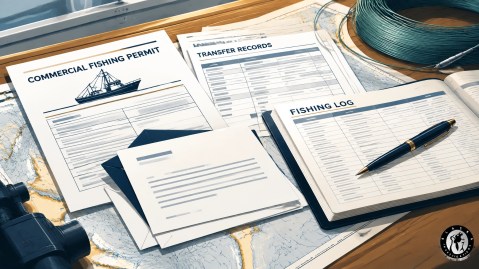
Scheme Two: The Absent Permit Holder
A separate federal case involved five commercial fishermen charged in an alleged illegal halibut-harvesting conspiracy involving IFQ permits.
An IFQ permit is a federal quota authorization used for commercial halibut and sablefish fishing. The holder must generally be aboard the vessel at all times during the trip, including when gear is set and when fish are harvested from that gear.
According to the indictment and subsequent reporting, the alleged scheme involved:
- Gear being set from one vessel.
- Halibut being transferred to another vessel.
- The quota-holding permit holder not being aboard at the relevant times.
- The fish being landed and reported as though it qualified under the appropriate IFQ balance.
- Allegedly false reporting concerning the vessel of harvest and the source of the catch.
- An alleged payment for the illegally caught halibut.
The alleged conduct occurred over multiple fishing trips. One defendant pleaded guilty and was sentenced in December 2025 to five years’ probation and a $15,000 fine. A second defendant pleaded guilty and was sentenced on May 6, 2026, to five years’ probation, a $15,000 fine, and a worldwide fishing and hunting ban during probation.
Other defendants were awaiting trial in the available reporting and are presumed innocent. They remain charged, not convicted.
The federal case shows a different weakness in the system. The problem was not necessarily that one form looked counterfeit. The alleged defect concerned physical presence: who was aboard, where the gear was set, which vessel handled the catch, and whether the reported chain matched what actually happened.
As one NOAA Fisheries law-enforcement official stated, protecting the future of Alaska’s fisheries requires “honest fishing practices, promoting fairness and equity for all industry participants.”
Why It Is Hard to See
Fishing-permit and quota abuse can be difficult to identify because the evidence is distributed across different systems.
Self-reported data. Catch, landing, vessel, and permit information is often reported by the participants themselves.
Paper compliance. A false transfer can be fully documented, properly stamped, and internally consistent. The defect may be the intent behind the form rather than the form itself.
Physical presence. Whether a person was aboard a vessel at a particular time is often the hardest fact to establish after the season has ended.
Small communities. Close communities can expose unusual activity quickly, but they can also make people reluctant to report a neighbor, employer, business partner, or family.
Time. Seasons end, vessels move, records age, and recollections become less precise. A question that could have been tested immediately becomes harder to verify later.
There is also a separate pattern of litigation involving alleged wage theft, unsafe housing, and deceptive recruitment in Alaska’s seafood-processing sector. Those are allegations in litigation, not established findings here, and they concern labor practices rather than permit fraud.
Where the Record Breaks
The strongest verification work compares independent records rather than accepting a single summary.
Relevant sources may include:
- CFEC permit and transfer records showing who held what, when, and through which mechanism.
- Fish tickets and landing reports showing who landed what, on which vessel, and where.
- Vessel-monitoring and position data, where applicable.
- Crew documentation and licensing records.
- Tender and dock receipts.
- Corporate and business filings linking apparently separate permit holders or operators.
- Court records, enforcement actions, and prior violations.
- Insurance and financing records, including representations made in applications and quota-loss coverage.
No single record is automatically proof.
The useful question is whether independent records corroborate one another. Does the transfer history match the claimed ownership? Does the landing record match the vessel location? Does the crew documentation match the people who were physically present? Does the financing or insurance application accurately describe the permit history?
This is also why document verification requires more than checking whether a form looks genuine.
What Professionals Should Verify
Before buying a permit or quota, transferring one, financing a vessel, or valuing a fishing business, buyers, lenders, attorneys, and insurers should consider:
- Verify current permit status and standing directly with CFEC rather than relying only on a seller’s copy.
- Review transfer history and identify unusual frequency, repeated recipients, or unresolved questions.
- Check available court records, enforcement actions, and violations.
- Confirm that claimed catch history is supported by landing records, not just a summary.
- Review liens, financing statements, and related business records.
- Compare representations in insurance or financing applications with the underlying documentation.
For attorneys, the documentary record can be unusually complete because the regulatory agency maintains it. That can work in your favor.
For insurers, natural exposure points include application misrepresentation, undisclosed enforcement history, and quota-loss claims.
These are general verification considerations, not legal advice. Permit, transfer, IFQ, conservation, and fisheries-enforcement requirements are specific and change over time. Confirm current requirements with CFEC, the relevant agency, and your own advisers.
What a Private Investigator Can, and Cannot, Do
Where lawfully directed, a private investigator can:
- Research CFEC permit and transfer records.
- Review court records, corporate filings, liens, financing records, and published enforcement actions.
- Trace relationships between nominally separate permit holders or operators.
- Compare claimed catch history or ownership against independent records.
- Identify inconsistencies between a representation and the documented record.
- Prepare a written report separating confirmed fact, allegation, and unverified inference.
A private investigator cannot obtain law-enforcement files, compel testimony or documents, access protected regulatory records without lawful authority, determine guilt, or assert that a person committed an offense.
A private investigator’s finding is not a finding of fact by a court or agency. We do not accuse people, guarantee results, recover permits or quota, or replace law enforcement.
Frequently Asked Questions
Why is Alaska’s commercial fishing permit system regulated this way?
Limited-entry and quota systems are designed to manage participation, protect conservation objectives, and promote fairness among industry participants. The specific rules depend on the fishery and the governing agency.
What is an IFQ permit, and why must the holder be aboard?
An Individual Fishing Quota permit authorizes an eligible participant to harvest an assigned amount of fish. For halibut and sablefish, the holder must generally be aboard throughout the trip, including when gear is set and fish are harvested.
How was the permit transfer scheme discovered?
Reporting indicates that CFEC noticed a pattern in its own records, including unusually frequent transfers. The pattern became significant when the transfers were considered together over time.
Can I verify a permit’s history and catch record before buying it?
Yes. Verify permit status and transfer history directly with CFEC. Compare the claimed catch history against landing records and other independent documentation rather than relying only on a seller’s summary.
Can a private investigator determine whether someone committed a fisheries offense?
No. Guilt and legal violations are determined by the appropriate agency and courts. A private investigator can conduct lawful records research, identify inconsistencies, and prepare a report that distinguishes confirmed information from allegations and inference.
Professional Verification in Alaska
Alaska Investigations Group provides lawful records research, civil investigations, digital intelligence, litigation support, background investigations, and related investigative services for attorneys, businesses, buyers, lenders, insurers, permit holders, and other authorized clients.
We have more than 10 years of professional investigative experience and handle sensitive assignments discreetly, with careful documentation and attention to legal limits.
Licensed Private Investigations Agency in Anchorage, Alaska. License 1126. Serving statewide except Fairbanks.
For a confidential, no-obligation consultation about a permit, quota, verification, or record-research question, request a consultation or call (907) 232-4731. You may also email mrrems@protonmail.com. We do not replace law enforcement, cannot compel records or subpoena documents, promise no outcome, and cannot accept every request.
Alaska’s permit system exists to protect a shared resource. Fraud aimed at that system is a conduct problem, but it is also a records problem: the paperwork may be exactly what it is supposed to be. Professional verification adds value by reading the record carefully, comparing independent sources, and refusing to treat a polished document as proof by itself.
Warm-Up Theft and No Road Out: Why Vehicle Theft Works Differently in Alaska

If your vehicle is stolen now: There is no waiting period. Contact the police agency with jurisdiction immediately, or call 911 if a crime is in progress or there is immediate danger. Obtain the case number, notify your insurer promptly, and provide the VIN, plate, make, model, color, distinguishing features, aftermarket parts, and recent photographs.
Alaska is arguably the clearest place in the United States where leaving a vehicle running unattended can be ordinary, rational behavior. In extreme cold, you warm the vehicle so it is not a freezer when you get inside.
That practical habit creates a theft opportunity that barely exists elsewhere. Alaska also has limited road connections to the outside, changing what happens after a vehicle is stolen. The result is an Alaska-specific theft pattern shaped by cold, geography, local resale, parts activity, and paperwork.
The Numbers
The Alaska Department of Public Safety’s 2025 Crime in Alaska Report, released in August 2026, recorded a substantial increase in reported motor vehicle theft involving Anchorage.
- The Anchorage Police Department recorded 1,452 motor vehicle thefts in 2025, compared with 1,214 in 2024.
- Statewide motor vehicle theft rose by 242 incidents during the same period.
- Anchorage accounted for 238 of those additional incidents.
- Property crime in the Municipality of Anchorage rose 19.4%.
- Data from the first half of 2025 indicated an approximately 26% increase in vehicle thefts in the Anchorage metropolitan area, while theft rates were declining nationally during that period.
The figures do not establish that every Alaska community experienced the same pattern. They show that Anchorage drove the statewide increase reported by DPS.
Why Alaska Is Different: Warm-Up Theft
Warm-up theft is not a technical term that requires a complicated explanation. It describes an opportunity created when a vehicle is left running and unattended while it warms up.
In Alaska, that behavior is understandable. Winter temperatures, short daylight, icy conditions, and the need to protect a vehicle from extreme cold make warming up part of daily life. The vehicle may be left in a driveway, outside an apartment, in a parking lot, or outside a store during a brief stop.
Those moments are precisely when no one may be watching closely.
The issue is not that every running vehicle will be stolen. The issue is that an unattended, running vehicle can reduce the time and effort required for a theft. A person may only need a few seconds of access before the vehicle is gone.
Remote-start systems change the risk somewhat. A vehicle can be running while locked, with the key fob retained by the owner. That is materially different from leaving the keys inside an unlocked vehicle. But the underlying cold-weather habit remains the same: the vehicle is running before the driver enters it.
Warm-up theft is a known and recurring pattern in Alaska. It should be treated as a practical risk created by ordinary winter behavior, not as a reason to blame drivers for needing a warm vehicle.
Why Alaska Is Different: No Road Out
A stolen vehicle in Anchorage generally cannot be driven to another state through a simple interstate route. Alaska has limited road connections to the outside, and many communities are connected by air, marine transportation, or a restricted road network.
That does not make recovery easier. It changes the economics and the investigative trail.
The Lower 48 pattern of steal, drive, cross a state line, and abandon or resell may not apply in the same way. In Alaska, a stolen vehicle may be:
- Stripped for parts.
- Resold locally under fraudulent paperwork.
- Moved between nearby communities.
- Advertised through online listings.
- Used temporarily and later abandoned.
That makes the parts market, local resale market, and paperwork trail especially important.
Parts carry identifiers. Online listings create records. Messages, photographs, descriptions, seller accounts, and meeting arrangements may preserve useful information. Buyers who encounter suspiciously cheap parts may also become witnesses if they retain communications or can describe what was offered.
This is the Alaska version of the same crime, not a separate category of criminal conduct, and not evidence that every theft is organized.
Where Cases Actually Break
Vehicle theft investigations often become clearer when separate records and physical observations are compared.
Relevant information may include:
- VIN plates or labels in multiple vehicle locations.
- Engine and transmission numbers.
- Etched or marked components.
- Aftermarket wheels, equipment, modifications, decals, and accessories.
- Salvage and auction records.
- Title, registration, lien, and transfer records where available.
- Insurance claim and total-loss records.
- Online listings and seller communications.
- Photographs taken before the theft and at recovery.
- The condition of the vehicle when it was located.
A recovered vehicle may show a pattern of removals rather than a random theft. Missing components, replaced parts, altered paperwork, mismatched equipment, or unusual aftermarket changes can create questions that are answered only by comparing the vehicle with its earlier documentation.
This is general investigative knowledge. We will not describe how identifiers are altered, how a VIN may be defeated, or how anyone could circumvent detection.
The useful question is not how to hide a vehicle. It is how to document what existed, what changed, and where the records lead.
Documented Alaska Examples
These published examples illustrate where vehicle-theft cases may break. They are not a statistical sample and do not establish an organized statewide trend.
-
Parts and online listings: Alaska Native News reported in August 2026 that a Fairbanks man was charged after Alaska State Troopers allegedly discovered parts from a stolen vehicle being sold online.
-
Burglary and local property: Radio Kenai reported in August 2026 that troopers traced stolen vehicles and property to a burglary along the Sterling Highway, after which a man was charged.
-
Vehicle location and arrest: In a March 2026 announcement, the Anchorage Police Department said officers located an occupied stolen vehicle and arrested a person after an APD police dog was used.
-
Fraudulent documentation: In a separate Alaska case described in published reporting, a person was charged with vehicle theft and forgery after allegedly selling stolen vehicles using fraudulent documentation; the paperwork trail was an important part of the allegation.
-
Mat-Su vehicle theft: Alaska’s News Source reported in May 2026 that troopers charged a 20-year-old in a Mat-Su crime spree involving a stolen truck.
Charges are accusations. Every person charged is presumed innocent unless proven guilty in court. The documented examples involve individual suspects and local resale, parts, burglary, or paperwork activity. No reporting reviewed for this article establishes that an organized VIN-cloning or vehicle-theft ring is operating in Alaska.
What Owners Should Document
Good documentation is most useful when it exists before the theft.
Keep the following information outside the vehicle:
- The VIN written down separately.
- The plate number, make, model, year, color, and identifying features.
- Photographs taken from all four corners.
- Close photographs of aftermarket wheels, parts, equipment, decals, and modifications.
- The title, registration, and service records.
- A list of aftermarket parts and serial numbers.
- Recent photographs showing the vehicle’s ordinary condition.
Photographs taken now are often the single most useful thing later. They help distinguish the vehicle from similar vehicles and provide a baseline for evaluating its condition if it is recovered.
Where avoidable, do not leave a vehicle running unattended, even briefly. If remote start is used, use a system that keeps the vehicle locked while the key fob remains with you.
Do not store spare keys inside the vehicle. Be cautious when private sellers offer parts or a vehicle at a suspiciously low price. Preserve the listing, seller name, messages, photographs, and transaction information rather than confronting the seller or attempting to investigate personally.
If Your Vehicle Is Stolen
Report the theft immediately. There is no waiting period.
Contact the agency with jurisdiction. Call 911 if a crime is in progress or there is immediate danger. Obtain the case number and notify your insurer promptly.
Provide:
- VIN.
- Plate number.
- Make, model, year, and color.
- Distinguishing marks.
- Recent photographs.
- Aftermarket parts and serial numbers.
- Last known location.
- Key and remote-start information.
- Any relevant seller, listing, or location information.
The reporting agency handles entry into applicable national systems. If the vehicle is recovered, it should be examined and documented rather than simply retrieved and returned to service. The vehicle’s condition at recovery may matter to the investigation and to an insurance claim.
Alaska Investigations Group is not law enforcement and does not recover vehicles.
What a Private Investigator Can and Cannot Do
Where lawfully directed, a private investigator may:
- Document the condition and identifiers of a recovered vehicle.
- Research public records, title and salvage histories, and lien and registration records where available.
- Corroborate a lead about a location or seller against independent sources.
- Locate a vehicle or person using lawful records research.
- Preserve and organize public-facing listings and communications.
- Prepare a written report separating confirmed facts from allegations and unverified leads.
A private investigator cannot:
- Seize or repossess a vehicle.
- Compel a person to return a vehicle.
- Subpoena records or compel production.
- Access protected records without lawful authority.
- Access law-enforcement databases.
- Impersonate law enforcement.
- Install a tracking device unlawfully.
- Guarantee that a vehicle will be found or recovered.
- Guarantee an insurance, court, or investigative result.
Recovery depends on the reporting agency, the insurer’s process, the condition and location of the vehicle, available records, and circumstances nobody controls.
The Alaska Shape of Vehicle Theft
Alaska’s vehicle-theft problem has a specific local shape: a habit born of cold and a geography with limited road connections to the outside.
Warm-up theft explains how an ordinary winter practice can create an opportunity. The limited road network helps explain why parts, local listings, community movement, and paperwork may become more important after the theft.
Understanding that shape makes early reporting, careful documentation, and independent record research more useful. It does not make recovery certain.
Confidential Consultation
For individuals, businesses, insurers, and attorneys with a vehicle theft, documentation, or record-research question, request a confidential, no-obligation consultation. Call (907) 232-4731 or email mrrems@protonmail.com.
Alaska Investigations Group has more than 10 years of professional investigative experience.
Licensed Private Investigations Agency in Anchorage, Alaska. License 1126. Serving statewide except Fairbanks.
We do not replace law enforcement, cannot seize or recover vehicles, cannot compel records or subpoena, and promise no outcome. We do not accept every request.
Frequently Asked Questions
What is warm-up theft and why is it more common in Alaska?
Warm-up theft occurs when someone takes a vehicle that has been left running and unattended while it warms up. It is more common in Alaska because extreme cold makes vehicle warm-up a normal and rational winter practice. There is no established figure here showing what share of Alaska thefts involve this pattern.
Why would someone steal a vehicle in Alaska if they cannot drive it out of the state?
A stolen vehicle may still have local value. It may be used locally, moved to another community, stripped for parts, or offered for resale with fraudulent documentation. Parts, online listings, and title records may preserve evidence of what happened.
What information should I keep about my vehicle in case it is stolen?
Keep the VIN, plate number, make, model, color, recent photographs, title, registration, service records, aftermarket-part list, and serial numbers outside the vehicle. Photograph the vehicle from all four corners and document distinguishing features before a theft occurs.
Can a private investigator recover a stolen vehicle?
No. A private investigator cannot seize, repossess, or compel the return of a stolen vehicle and cannot promise recovery. A private investigator may, where lawfully directed, research records, corroborate a lead, document a recovered vehicle, and prepare a factual report.
What should I do if I am offered parts or a vehicle at a suspiciously low price?
Do not confront the seller or attempt to investigate personally. Preserve the listing, seller information, photographs, messages, and transaction details. Consult the agency with jurisdiction and your insurer as appropriate. Avoid completing the transaction until ownership and documentation have been independently verified.
General-Information Disclaimer
This article is provided for general informational purposes only. It is not legal advice, insurance advice, law-enforcement advice, or a guarantee of any result.
Title, registration, insurance, salvage, lien, repossession, reporting, and record-access requirements vary by jurisdiction and circumstance. Readers should consult their own attorney, insurer, and the agency with jurisdiction regarding a specific vehicle theft or documentation issue.
Alaska Investigations Group cannot compel records, subpoena, seize or recover vehicles, access protected or law-enforcement databases without lawful authority, or guarantee that a vehicle, part, seller, record, insurance payment, or other result will be located or obtained.
Sources
- Alaska Department of Public Safety: Annual Crime in Alaska Report
- 2025 Crime in Alaska Report PDF
- Anchorage Police Department: Bruce King Arrested by K9 Kevin for Vehicle Theft
- Alaska Native News: Fairbanks Man Busted after Selling Parts from Stolen Vehicle Online
- Radio Kenai: Man Charged after Troopers Trace Stolen Vehicles and Property to Sterling Highway Burglary
- Alaska’s News Source: 20-Year-Old Charged in Mat-Su Crime Spree Involving Stolen Truck
- How to Verify a Document Before You Trust It
The Longest List in Alaska: Why So Many Alaska Native People Stay Missing

Alaska maintains an official public record of missing Alaska Native and American Indian people. The record is published by the Alaska Department of Public Safety through its recurring quarterly report.
What makes the current record unusual is not simply that it exists. It is what the dates contain. The dates of last contact in the currently published list reach back to the 1960s, 1970s, and 1980s. A person listed with a 1960 last-contact date has been missing for more than six decades.
That is a public record of unresolved absence. It shows both the value of continued documentation and the scale of the work that remains.
The Record Itself
The Alaska Department of Public Safety publishes Alaska’s Missing Alaska Natives & American Indians Quarterly Report. The Q2 2026 report covers April 1 through June 30, 2026.
The report includes cases investigated by:
- The Alaska Department of Public Safety
- Anchorage Police Department
- Fairbanks Police Department
- Seward Police Department
- Homer Police Department
- Soldotna Police Department
- Wasilla Police Department
- Kenai Police Department
Each listed entry includes identifying and investigative fields such as the person’s name, community, borough, date of birth, gender, race or ethnicity category, investigating agency, date of last contact, and circumstance classification.
The department classifies circumstances as:
- Environment: Wilderness, waterways, ocean, aircraft crashes, other non-suspicious outdoor deaths where human remains were not located by search and rescue teams, or another related event.
- Suspicious: Suspected criminal activity surrounding the event.
- Not Suspicious: No indication of criminal activity or an environmental factor.
- Unknown: The circumstance cannot be determined.
The report is not a complete explanation of every missing-person case in Alaska. Its scope is defined by the agencies and categories included. The report also states that its contents are dynamic and subject to change.
Even with those limitations, the report is an important instrument of transparency. It creates a public, recurring record that can be reviewed, updated, and compared over time.

Why Cases Stay Open
There is no single explanation. The conditions are structural and often overlap.
Distance and Access
Alaska’s geography changes the mechanics of an investigation.
Most communities are not connected by roads. Travel may depend on a small aircraft, ferry, skiff, snowmachine, or a combination of transportation methods. Weather can ground aircraft. Water conditions can delay boats. Winter conditions can restrict movement and alter the landscape.
Traveling to a location is not always a matter of driving there. A search or follow-up investigation may require aircraft coordination, local knowledge, suitable equipment, favorable weather, and a safe way to reach the site.
Mapping can also be difficult. A last-known location may be described by a local landmark, river route, hunting area, trail, shoreline, or seasonal camp rather than a conventional street address.
Environmental Circumstances
The Alaska Department of Public Safety states that environmental factors are believed to play a role in more than 75% of cases involving Alaska Native or American Indian individuals.
An environmental classification can involve wilderness, waterways, the ocean, an aircraft crash, or another non-suspicious outdoor event in which remains were not located by search and rescue teams.
In practical terms, this means a person may have gone out on land or water and not been recovered. The absence of remains can be a normal feature of an environmental case. It is not, by itself, evidence of criminal activity or evidence of any particular explanation.
Law-Enforcement Presence
In 2019, ProPublica and the Anchorage Daily News reported that more than a third of Alaska villages had no regular law-enforcement presence. Their reporting described communities that could be reached only by air, boat, all-terrain vehicle, or snowmachine.
The Village Public Safety Officer program has changed since that reporting. In May 2026, Alaska Department of Public Safety Commissioner James Cockrell stated that 90 VPSOs were working in 57 villages, up from 38 in 2021, according to reporting at the time. That increase is real progress.
It does not eliminate the larger geographic and staffing challenge. Coverage remains uneven, and the needs of remote communities remain substantial.
Jurisdiction
Tribal, state, local, and federal authorities may have overlapping responsibilities or interests in the same geographic area. The applicable authority can depend on the location, the circumstances, the person involved, and the nature of the suspected event.
That complexity affects early coordination. Information may need to move between agencies that operate under different systems, procedures, and legal authorities. Describing that complexity is not an assignment of fault. It is a description of the operating environment.
Time
Time affects evidence in every investigation.
Witness memory fades. Phone and business records may become harder to obtain or may no longer be retained. Physical scenes change. Seasonal conditions can cover, move, or erase surface evidence. Buildings are renovated or demolished. Vehicles are sold. People relocate.
These are general investigative realities. They do not establish what happened in any particular case. They explain why prompt reporting and careful preservation matter.
What Has Changed
Alaska has taken several steps to strengthen its response.
In Fiscal Year 2025, the Governor and Legislature funded four full-time investigators dedicated exclusively to MMIP cases.
DPS states that it enters every missing person into the federal NamUs database within 60 days. NamUs provides a national system for missing and unidentified persons and allows information to be searched across jurisdictional boundaries.
DPS also states that it has implemented nearly every recommendation from the Governor’s People First MMIP Council and established a statewide MMIP Review Commission to examine unresolved cases.
The state has increased VPSO staffing since 2021. The Governor’s Council identified additional recommendations, including voluntarily adopting Savanna’s Act, annual cultural and communication training for law enforcement, community response plans through the Small Community Emergency Response Plan program, and a dedicated tribal liaison position in statute.
A separate VPSO working group report found that VPSO statutes lacked a clear law-enforcement mission and defined duties.
In May 2026, Senators Dan Sullivan and Lisa Murkowski, joined by the Assistant Secretary for Indian Affairs, announced an effort to reinvigorate Operation Lady Justice and establish an MMIP task force focused on missing and murdered persons in Indian Country and Alaska Native villages.
These are meaningful developments. They are also partial. A program, database, commission, or task force does not erase the older cases already present in the public record.
What Remains Open
A list that reaches back decades is the clearest measure of the distance between effort and outcome.
That observation is not an accusation against one agency or one administration. It is a statement about scale. The state is attempting to improve staffing, data sharing, review, and coordination while carrying unresolved cases that may have begun generations earlier.
Data quality also matters. The DPS report states that its contents are dynamic and subject to change. Reporting rates, historical record-keeping, spelling variations, incomplete information, and changes in investigative classification affect what any public list can show.
Geography and access remain central operational obstacles. The public record can identify a case, document a last contact date, and preserve a circumstance classification. It cannot by itself supply a witness, recover a record, or reconstruct a location that has changed over time.
What Families and Communities Should Know
There is no waiting period to report someone missing in Alaska. A report can be filed immediately, regardless of the person’s age or circumstances.
Contact the agency with jurisdiction. Call 911 for an emergency. Depending on the community and circumstances, contact the Alaska State Troopers or the local police department. DPS also maintains an anonymous tip line.
Useful public resources include:
- NamUs, the National Missing and Unidentified Persons System, a national, publicly searchable system for missing and unidentified persons.
- The Alaska active missing-person list, maintained by the Alaska Bureau of Investigation.
- The DPS Missing and Murdered Indigenous Persons page, which includes reports and public guidance.
Keep a written record of:
- The date and time the person was last seen or contacted
- Who last saw or spoke with them
- Clothing and belongings
- What they were driving or traveling in
- Their intended route or destination
- Phone number and carrier
- Employer
- Known contacts, routines, and locations
A written timeline is more useful to an investigator than a remembered timeline.
Preserve rather than delete. Keep messages, call logs, photographs, voicemails, social media content, receipts, travel records, and other potentially relevant information. Deleting something because it appears irrelevant can remove information an investigator later needs.
Choose one family point of contact when possible. Keep a log of each agency contact, including the person’s name, date, information exchanged, and case number.
Families do not need to hire anyone to report a missing person or to have a case investigated by law enforcement. Tribal councils and community organizations often coordinate searches and family support. Contact your own tribal government or community organization for local guidance.
For a separate practical discussion, Missing in Alaska: What to Do in the First 48 Hours addresses the first week of a family’s response. This article addresses the broader systemic picture.
What a Private Investigator Can and Cannot Do
In most missing-person matters, the primary investigation belongs with the agency that has jurisdiction. Private work, when appropriate, supports or supplements that investigation. It does not replace it.
Where a family or attorney directs the work and the objective is lawful, a private investigator may be able to:
- Research public and commercially available records across jurisdictions
- Corroborate a lead against independent sources
- Interview people who are willing to speak, without impersonation or pressure
- Check whether a person is incarcerated, hospitalized, deceased, or has moved
- Verify whether a business or address actually exists
- Prepare a written report separating confirmed information from claims
A private investigator cannot:
- Compel a person or organization to cooperate
- Subpoena records
- Access phone, bank, medical, or account records without lawful authority
- Obtain law-enforcement databases
- Impersonate law enforcement
- Install tracking devices unlawfully
- Promise that a person will be found
No legitimate investigator makes those claims. Anyone who does should be regarded with caution.
Alaska Investigations Group has more than 10 years of professional investigative experience. Licensed Private Investigations Agency in Anchorage, Alaska. License 1126. Serving statewide except Fairbanks.
For families and attorneys seeking to understand what lawful investigative support could or could not contribute to a documented review of a case file, request a confidential, no-obligation consultation or call (907) 232-4731. Email: mrrems@protonmail.com.
The firm does not take the place of law enforcement, cannot compel records or persons, does not promise any outcome, and cannot accept every request.
Frequently Asked Questions
Is there a waiting period before I can report someone missing in Alaska?
No. There is no mandatory waiting period. Report the person immediately to the agency with jurisdiction. Call 911 when there is an emergency or immediate danger.
What is the difference between an environmental case and a suspicious case?
DPS defines an environmental case as involving wilderness, waterways, the ocean, aircraft crashes, or another non-suspicious outdoor event where remains were not located by search and rescue teams. A suspicious case involves suspected criminal activity surrounding the event.
What is NamUs, and why does it matter?
NamUs is the National Missing and Unidentified Persons System. It is a national, publicly searchable system for missing and unidentified persons. DPS states that every missing person is entered into NamUs within 60 days.
Can a private investigator obtain phone or bank records?
Not without lawful authority. Private investigators cannot simply obtain protected phone, bank, medical, or account records because a family member requests them.
How long do records that matter to a missing-person investigation stay available?
It varies by record type and custodian. Some records may be retained longer than others, and policies differ. That is one reason early reporting and preservation matter.
General Information Disclaimer
This article is provided for general informational purposes only. It is not legal advice and does not create an attorney-client relationship. Nothing in this article should be treated as a substitute for advice from a qualified attorney, the agency with jurisdiction, or a reader’s tribal government.
The DPS quarterly report is dynamic, and its contents may change. Data quality, historical documentation, reporting rates, classification practices, and agency participation affect what any public list shows. Inclusion or exclusion from a public list does not independently establish what happened to any person.
Alaska Investigations Group is not law enforcement and is not affiliated with the Alaska Department of Public Safety, Alaska State Troopers, NamUs, tribal governments, or community organizations. The firm does not have law-enforcement authority or access to law-enforcement databases.
No result is guaranteed. The firm cannot compel a person or records, cannot promise that anyone will be found, and cannot determine the outcome of a missing-person investigation. Emergencies and active missing-person matters should be reported immediately to the agency with jurisdiction or 911. Readers should consult their own attorney and, where relevant, their tribal government.
Sources
- Alaska Department of Public Safety, Missing & Murdered Indigenous Persons
- Alaska DPS: Q2 2026 Quarterly Missing Indigenous Persons Report
- NamUs: National Missing and Unidentified Persons System
- Alaska active missing-person list
- Alaska DPS anonymous tips
- Governor’s Council on Missing and Murdered Indigenous Persons Recommendations Report
- ProPublica and Anchorage Daily News, 2019 reporting on villages without regular law-enforcement presence
- Alaska’s News Source, May 2026 coverage of the Operation Lady Justice announcement and MMIP task force
- Missing in Alaska: What to Do in the First 48 Hours
How to Vet Anyone You Hire: An Employer’s Guide to Verification

Hiring and vendor decisions rarely fail because nobody exercised judgment. They fail because a verification step never happened.
A resume, reference list, license card, certificate, company website, or confident explanation may be handed to you. Receiving it is not verifying it. Verification is a defined sequence that helps you determine what is true, what is supported, and what remains unverified before money, access, responsibility, or trust moves.
The Four Questions
Whether you are hiring an employee, contractor, consultant, vendor, or expert witness, begin with four questions.
1. Identity
Is this the person or entity they claim to be?
Confirm the legal identity of the individual or business. For an entity, review its registration, current status, registered agent, and operating address. For an individual, distinguish identity confirmation from assumptions based on a name, email address, or online profile.
2. History
What have they actually done?
Review employment dates, titles, prior engagements, business history, licensing history, and relevant public records. A claim is not history merely because it appears on a resume or website.
3. Capability
Can they lawfully and actually perform the work?
Check licensing, certification, insurance, bonding, training, equipment, staffing, and authority. A person may have experience but lack the current license required for the work. A company may be registered but not authorized to provide the service it is selling.
4. Exposure
What obligations, disputes, judgments, liens, or outstanding filings exist?
Exposure does not automatically establish misconduct. It identifies issues that may affect your organization’s risk, contract, finances, premises, systems, or reputation.
This framework is simple. The discipline is in following it consistently.

Know the Legal Line
Employment-related background screening requires care. When an employer obtains a consumer report from a consumer reporting agency, federal requirements generally apply. Those requirements ordinarily include a clear written disclosure and written authorization before the report is obtained.
If an employer is considering an adverse employment decision based in whole or in part on that report, the applicant or employee generally must receive notice, relevant information, and an opportunity to review and dispute inaccurate or incomplete material before the final decision. State and local requirements may add protections or impose stricter rules.
This is general information, not a compliance procedure or legal advice. Compliance is the employer’s responsibility. Employment, privacy, consumer-reporting, and background-check requirements vary by jurisdiction and change over time. Consult your own counsel before designing or applying a screening process. The Federal Trade Commission’s employer guidance provides additional general information.
Also understand what lawful screening cannot provide. Some information an employer may want is protected, restricted, incomplete, or unavailable through lawful consumer reporting. Trying to obtain it through another route can create legal exposure rather than useful information.
A background check is one input. Verification is the broader process of identifying claims, testing them against independent sources, recording limitations, and deciding what the information means for the specific role.
Test the Claims
Education and credentials
Confirm degrees, attendance, graduation dates, licenses, and certifications through the issuing institution or official registry whenever possible. Do not treat a screenshot, certificate image, or card as independent confirmation.
Professional licenses should be checked in the relevant licensing authority’s registry. Verify the status, jurisdiction, expiration date, discipline history where publicly available, and whether the license covers the work being offered.
Employment history
Confirm the employer, dates, and actual title. Do not automatically treat a polished job description as proof of the responsibilities performed.
Many institutions and employers will confirm dates and title but provide no opinion about performance. That limitation is normal. It is also why multiple independent confirmations matter.
A former employer confirming that someone worked there is confirmation. A reference saying the person was “excellent” is a characterization. Both may be relevant, but they are not the same type of evidence.
Employment gaps are not proof of dishonesty or wrongdoing. Records may be incomplete, dates may be misunderstood, and people may have legitimate reasons for periods outside the workforce. Treating every gap as suspicious is a common amateur error. The proper response is to identify the gap and seek an explanation, not to convert it into a conclusion.
Make References Useful
Candidate-supplied references are a starting point, not a representative sample of every professional relationship.
Begin by asking:
- What was the nature of your relationship?
- When did you work together?
- What was the person’s role?
- How closely did you observe the work?
- What responsibilities did the person actually perform?
Then ask specific, job-related questions tied to the position you are filling. Ask how the person handled deadlines, documentation, supervision, conflict, confidential information, or independent work when those subjects matter to the role.
“Would you hire this person again?” may produce a useful response, but it should not replace specific questions. A reference who refuses to answer meaningful questions but says only that the person “left on good terms” has confirmed very little.
The difference is important:
- Confirmation establishes a fact, such as dates, title, or relationship.
- Characterization expresses an opinion about performance, reliability, or judgment.
Characterization can inform a decision. It should not be mistaken for independently verified fact.
Vet the Business, Not Just the Representative
When you hire a vendor, contractor, or consultant, verify the entity and the individual acting for it.
Confirm whether the business is registered and current, who the registered agent is, and whether the stated address corresponds to an operating location. Check whether the company holds the license required for the work being sold. Review insurance and bonding, including expiration dates and relevant coverage.
Determine whether the person you are dealing with has authority to bind the company. A professional website and branded email address do not establish authority.
For vendors handling money, data, keys, facilities, or system access, examine subcontractor and supply-chain exposure. Ask who will actually perform the work, where information will be stored, and whether other entities will have access to your systems or premises.
Review litigation, judgments, liens, and public filings where relevant. Request references, but do not rely only on those supplied by the vendor. Independent references can provide a more balanced picture.

Red Flags Matter
One discrepancy does not prove wrongdoing. Records are often incomplete, names can be confused, and businesses may change addresses or ownership. Verification means corroboration, not a single search result.
Still, certain patterns deserve additional attention:
- Refusal or delay in providing documentation that a legitimate operator would normally have.
- A single contact who becomes unavailable whenever verification is discussed.
- A license or certificate offered only as an image, without an official registry confirmation.
- Pressure to decide immediately or pay unusually far in advance.
- A business address that resolves to a mailbox or residence without a clear operating explanation.
- A company name that closely resembles an established business.
- References that all repeat the same polished sentence.
- Dates, titles, business names, or responsibilities that change between conversations.
Treat these as leads for further review, not automatic findings.
What an Investigator Adds
An investigator can assist with record research across jurisdictions, corroboration against independent sources, field verification of an address or operating business, and written reporting that separates confirmed facts from claims and unresolved questions.
A private investigator cannot lawfully obtain protected records without proper authority. An investigator cannot impersonate someone to obtain information, misrepresent a purpose, or present guesses as facts. A consumer report on an employee cannot be obtained unless the requesting party has the lawful basis and process required for that report.
Professional investigative work is not a shortcut around employment law or privacy restrictions. It is a disciplined method for gathering and documenting information within lawful boundaries.
Build the File

Retain a clear record of:
- The source of each claim.
- The date and method of each verification attempt.
- Who confirmed the information and in what capacity.
- What was confirmed.
- What remained unverified.
- Any discrepancy and the explanation provided.
- The decision made and the information considered.
If a hiring or contracting decision is later challenged, the question will not be only whether the decision turned out well. Your organization may also need to explain what it checked, how it checked it, and what it knew at the time.
The telling failure is not always a bad hire. It is being unable to say what was checked.
For a related discussion about verifying the origin and support of documents, see How to Verify a Document Before You Trust It. That process addresses documents themselves; this article addresses the people and entities you are considering hiring.
Verification Changes the Decision
Verification is slower than accepting a claim. It is not free, and it will not identify every bad actor or eliminate every risk.
It changes what you can say afterward.
You can explain which facts were confirmed, which statements came from interested parties, which records were unavailable, and why your organization made its decision on the information reasonably available at the time. That is the value of a repeatable process.
Frequently Asked Questions
What is the difference between a background check and verifying a hire?
A background check is one source of information, often obtained through a consumer reporting agency or another screening provider. Verification is the broader process of confirming identity, history, capability, and exposure through appropriate independent sources. A background check may be part of verification, but it does not replace the entire process.
Can I check a job candidate’s references without asking their permission?
Requirements vary by jurisdiction, employer policy, and the type of information being obtained. Consumer reports and certain employment-related checks may require disclosure and written authorization. Consult employment counsel before contacting references or obtaining reports, especially when the information will affect a hiring decision.
How do I confirm a contractor or vendor is legitimate?
Verify the legal entity, current registration, operating address, licensing, insurance, bonding, authority of the representative, relevant litigation or liens, subcontractors, and independent references. Confirm important information through official or independent sources rather than relying only on the vendor’s website or supplied documents.
What can a private investigator find that I cannot find myself?
An investigator may assist with multi-jurisdictional research, source corroboration, field verification, and organized reporting. The investigator remains subject to privacy laws, access restrictions, and lawful-process requirements. No protected record may be obtained without proper authority, and no conclusion should be presented as fact without support.
What should I document if I later have to defend a hiring decision?
Document the information provided, every source checked, dates of contact, the identity and role of each person who confirmed information, discrepancies, unresolved limitations, and the reasoning behind the decision. Preserve relevant authorizations, reports, communications, and notes according to your organization’s retention practices.
About Alaska Investigations Group
Alaska Investigations Group provides confidential investigative research, due-diligence support, documentation, and intelligence services for employers, businesses, insurers, attorneys, law firms, government entities, and private organizations.
The firm has more than 10 years of professional investigative experience and handles each assignment according to its circumstances.
Licensed Private Investigations Agency in Anchorage, Alaska. License 1126. Serving statewide except Fairbanks.
Disclaimer
This article is provided for general informational purposes only. It is not legal advice, employment advice, privacy advice, consumer-reporting advice, or a compliance procedure.
Employment, privacy, consumer-reporting, background-check, licensing, data-access, and record-retention requirements vary by jurisdiction and may change. Compliance with applicable requirements is the reader’s responsibility. Alaska Investigations Group does not warrant that the information is complete, current, or applicable to a particular hiring or contracting decision.
Readers should consult their own qualified counsel before obtaining reports, contacting references, evaluating records, making an adverse employment decision, or designing a screening process. A failed, mismatched, or incomplete record is not proof of wrongdoing. Records may be incomplete, incorrectly associated, outdated, or inaccurate; responsible verification requires corroboration and appropriate professional review.
Request a Confidential Consultation
Employers, businesses, and organizations may request a confidential, no-obligation consultation to discuss whether a verification or due-diligence matter can be properly scoped.
Request a consultation or call (907) 232-4731. You may also email mrrems@protonmail.com.
Not every request can be accepted. Outcomes are not guaranteed. Some matters belong with law enforcement or qualified counsel.


