Gaming the Permit: How Alaska’s Fishing Quota System Gets Abused, and How It Gets Caught

Resources and Reporting
- Alaska Commercial Fisheries Entry Commission
- Alaska Public Media reporting on the Kodiak permit case
- KMXT reporting on alleged illegal permit transfers
- Alaska Beacon reporting
- Anchorage Daily News reporting
- U.S. Attorney’s Office indictment announcement
- Juneau Empire reporting on halibut sentencing
- Radio Kenai reporting on the indictment
- Anchorage Daily News reporting on seafood-processing labor litigation
Alaska’s commercial fisheries are not open access. Limited-entry permits and federal quota systems control who may participate, how fishing activity is attributed, and how harvests are recorded.
That structure exists for conservation, fairness, and orderly management. It also creates valuable, transferable, and sometimes financeable interests. Where an asset carries significant economic importance, disputes and fraud exposure follow.
The important question is not whether every document looks official.
The important question is whether the entire record makes sense.
The Rules Behind the Records
The Alaska Commercial Fisheries Entry Commission, or CFEC, administers limited-entry permits and maintains records concerning permit holders, transfers, applications, and associated paperwork.
As general information:
- A permit holder generally may not allow another person to use the permit without a formal transfer through CFEC. Both the holder and the unauthorized user may face penalties.
- A permit holder is generally required to have the permit in their possession when operating the gear for which it was issued.
- Permanent transfers must follow commission procedures, including a notice period of 60 days and commission review.
- Individual Fishing Quota permits for halibut and sablefish require the permit holder to be aboard the vessel throughout the fishing trip, including when gear is set and when fish are harvested from that gear.
Requirements can vary by fishery and can change. Confirm current requirements directly with CFEC, the relevant agency, and your own attorney. This article provides general information, not legal advice.
Scheme One: The Permit Shuffle
In April 2025, Alaska authorities charged members of a Kodiak fishing family and their company in connection with an alleged multi-year effort to bypass ownership limits involving salmon setnet permits.
The allegations described a repeated pattern:
- Permits were allegedly transferred as gifts to crewmembers.
- The permits were later allegedly transferred back.
- The arrangement allegedly allowed the family to retain practical control over more permits than state limits allowed.
- More than 30 fishery violations were alleged, along with charges involving scheme to defraud, theft, perjury, and false statements on CFEC permit documents.
- Approximately $1.17 million in illegal proceeds was alleged.
The family denies the charges. A family representative characterized the gifting practice as a long-standing industry custom and stated that the charges were not supported by the facts. Those allegations remain matters for the criminal process, and no conclusion should be drawn from the charges alone.
The most instructive point is how the matter reportedly came to attention. CFEC alerted Alaska Wildlife Troopers in 2023 after noticing the suspicious frequency and pattern of the transfers.
That matters.
The individual transfers were documented. Each one may have appeared ordinary when viewed separately. The concern emerged from the shape of the activity over time: repeated transfers, repeated recipients, and a recurring return of control.
The record-keeping agency noticed the pattern in its own data.
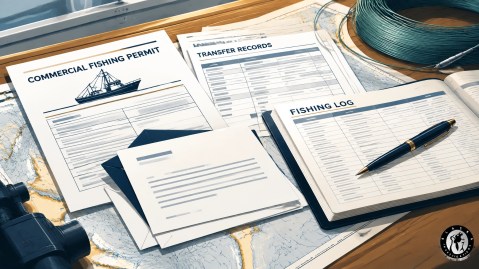
That is the core lesson for verification work. A document can be complete, signed, accepted, and properly recorded while still failing to describe the underlying arrangement accurately.
Scheme Two: The Absent Permit Holder
A separate federal case involved five commercial fishermen charged in an alleged illegal halibut-harvesting conspiracy involving IFQ permits.
An IFQ permit is a federal quota authorization used for commercial halibut and sablefish fishing. The holder must generally be aboard the vessel at all times during the trip, including when gear is set and when fish are harvested from that gear.
According to the indictment and subsequent reporting, the alleged scheme involved:
- Gear being set from one vessel.
- Halibut being transferred to another vessel.
- The quota-holding permit holder not being aboard at the relevant times.
- The fish being landed and reported as though it qualified under the appropriate IFQ balance.
- Allegedly false reporting concerning the vessel of harvest and the source of the catch.
- An alleged payment for the illegally caught halibut.
The alleged conduct occurred over multiple fishing trips. One defendant pleaded guilty and was sentenced in December 2025 to five years’ probation and a $15,000 fine. A second defendant pleaded guilty and was sentenced on May 6, 2026, to five years’ probation, a $15,000 fine, and a worldwide fishing and hunting ban during probation.
Other defendants were awaiting trial in the available reporting and are presumed innocent. They remain charged, not convicted.
The federal case shows a different weakness in the system. The problem was not necessarily that one form looked counterfeit. The alleged defect concerned physical presence: who was aboard, where the gear was set, which vessel handled the catch, and whether the reported chain matched what actually happened.
As one NOAA Fisheries law-enforcement official stated, protecting the future of Alaska’s fisheries requires “honest fishing practices, promoting fairness and equity for all industry participants.”
Why It Is Hard to See
Fishing-permit and quota abuse can be difficult to identify because the evidence is distributed across different systems.
Self-reported data. Catch, landing, vessel, and permit information is often reported by the participants themselves.
Paper compliance. A false transfer can be fully documented, properly stamped, and internally consistent. The defect may be the intent behind the form rather than the form itself.
Physical presence. Whether a person was aboard a vessel at a particular time is often the hardest fact to establish after the season has ended.
Small communities. Close communities can expose unusual activity quickly, but they can also make people reluctant to report a neighbor, employer, business partner, or family.
Time. Seasons end, vessels move, records age, and recollections become less precise. A question that could have been tested immediately becomes harder to verify later.
There is also a separate pattern of litigation involving alleged wage theft, unsafe housing, and deceptive recruitment in Alaska’s seafood-processing sector. Those are allegations in litigation, not established findings here, and they concern labor practices rather than permit fraud.
Where the Record Breaks
The strongest verification work compares independent records rather than accepting a single summary.
Relevant sources may include:
- CFEC permit and transfer records showing who held what, when, and through which mechanism.
- Fish tickets and landing reports showing who landed what, on which vessel, and where.
- Vessel-monitoring and position data, where applicable.
- Crew documentation and licensing records.
- Tender and dock receipts.
- Corporate and business filings linking apparently separate permit holders or operators.
- Court records, enforcement actions, and prior violations.
- Insurance and financing records, including representations made in applications and quota-loss coverage.
No single record is automatically proof.
The useful question is whether independent records corroborate one another. Does the transfer history match the claimed ownership? Does the landing record match the vessel location? Does the crew documentation match the people who were physically present? Does the financing or insurance application accurately describe the permit history?
This is also why document verification requires more than checking whether a form looks genuine.
What Professionals Should Verify
Before buying a permit or quota, transferring one, financing a vessel, or valuing a fishing business, buyers, lenders, attorneys, and insurers should consider:
- Verify current permit status and standing directly with CFEC rather than relying only on a seller’s copy.
- Review transfer history and identify unusual frequency, repeated recipients, or unresolved questions.
- Check available court records, enforcement actions, and violations.
- Confirm that claimed catch history is supported by landing records, not just a summary.
- Review liens, financing statements, and related business records.
- Compare representations in insurance or financing applications with the underlying documentation.
For attorneys, the documentary record can be unusually complete because the regulatory agency maintains it. That can work in your favor.
For insurers, natural exposure points include application misrepresentation, undisclosed enforcement history, and quota-loss claims.
These are general verification considerations, not legal advice. Permit, transfer, IFQ, conservation, and fisheries-enforcement requirements are specific and change over time. Confirm current requirements with CFEC, the relevant agency, and your own advisers.
What a Private Investigator Can, and Cannot, Do
Where lawfully directed, a private investigator can:
- Research CFEC permit and transfer records.
- Review court records, corporate filings, liens, financing records, and published enforcement actions.
- Trace relationships between nominally separate permit holders or operators.
- Compare claimed catch history or ownership against independent records.
- Identify inconsistencies between a representation and the documented record.
- Prepare a written report separating confirmed fact, allegation, and unverified inference.
A private investigator cannot obtain law-enforcement files, compel testimony or documents, access protected regulatory records without lawful authority, determine guilt, or assert that a person committed an offense.
A private investigator’s finding is not a finding of fact by a court or agency. We do not accuse people, guarantee results, recover permits or quota, or replace law enforcement.
Frequently Asked Questions
Why is Alaska’s commercial fishing permit system regulated this way?
Limited-entry and quota systems are designed to manage participation, protect conservation objectives, and promote fairness among industry participants. The specific rules depend on the fishery and the governing agency.
What is an IFQ permit, and why must the holder be aboard?
An Individual Fishing Quota permit authorizes an eligible participant to harvest an assigned amount of fish. For halibut and sablefish, the holder must generally be aboard throughout the trip, including when gear is set and fish are harvested.
How was the permit transfer scheme discovered?
Reporting indicates that CFEC noticed a pattern in its own records, including unusually frequent transfers. The pattern became significant when the transfers were considered together over time.
Can I verify a permit’s history and catch record before buying it?
Yes. Verify permit status and transfer history directly with CFEC. Compare the claimed catch history against landing records and other independent documentation rather than relying only on a seller’s summary.
Can a private investigator determine whether someone committed a fisheries offense?
No. Guilt and legal violations are determined by the appropriate agency and courts. A private investigator can conduct lawful records research, identify inconsistencies, and prepare a report that distinguishes confirmed information from allegations and inference.
Professional Verification in Alaska
Alaska Investigations Group provides lawful records research, civil investigations, digital intelligence, litigation support, background investigations, and related investigative services for attorneys, businesses, buyers, lenders, insurers, permit holders, and other authorized clients.
We have more than 10 years of professional investigative experience and handle sensitive assignments discreetly, with careful documentation and attention to legal limits.
Licensed Private Investigations Agency in Anchorage, Alaska. License 1126. Serving statewide except Fairbanks.
For a confidential, no-obligation consultation about a permit, quota, verification, or record-research question, request a consultation or call (907) 232-4731. You may also email mrrems@protonmail.com. We do not replace law enforcement, cannot compel records or subpoena documents, promise no outcome, and cannot accept every request.
Alaska’s permit system exists to protect a shared resource. Fraud aimed at that system is a conduct problem, but it is also a records problem: the paperwork may be exactly what it is supposed to be. Professional verification adds value by reading the record carefully, comparing independent sources, and refusing to treat a polished document as proof by itself.


