How to Vet Anyone You Hire: An Employer’s Guide to Verification

Hiring and vendor decisions rarely fail because nobody exercised judgment. They fail because a verification step never happened.
A resume, reference list, license card, certificate, company website, or confident explanation may be handed to you. Receiving it is not verifying it. Verification is a defined sequence that helps you determine what is true, what is supported, and what remains unverified before money, access, responsibility, or trust moves.
The Four Questions
Whether you are hiring an employee, contractor, consultant, vendor, or expert witness, begin with four questions.
1. Identity
Is this the person or entity they claim to be?
Confirm the legal identity of the individual or business. For an entity, review its registration, current status, registered agent, and operating address. For an individual, distinguish identity confirmation from assumptions based on a name, email address, or online profile.
2. History
What have they actually done?
Review employment dates, titles, prior engagements, business history, licensing history, and relevant public records. A claim is not history merely because it appears on a resume or website.
3. Capability
Can they lawfully and actually perform the work?
Check licensing, certification, insurance, bonding, training, equipment, staffing, and authority. A person may have experience but lack the current license required for the work. A company may be registered but not authorized to provide the service it is selling.
4. Exposure
What obligations, disputes, judgments, liens, or outstanding filings exist?
Exposure does not automatically establish misconduct. It identifies issues that may affect your organization’s risk, contract, finances, premises, systems, or reputation.
This framework is simple. The discipline is in following it consistently.
Know the Legal Line
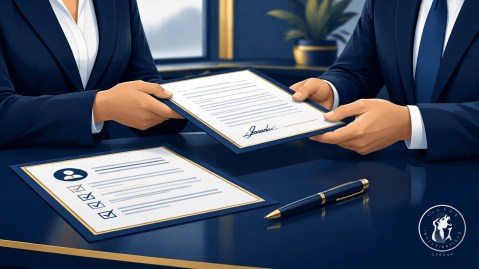
Employment-related background screening requires care. When an employer obtains a consumer report from a consumer reporting agency, federal requirements generally apply. Those requirements ordinarily include a clear written disclosure and written authorization before the report is obtained.
If an employer is considering an adverse employment decision based in whole or in part on that report, the applicant or employee generally must receive notice, relevant information, and an opportunity to review and dispute inaccurate or incomplete material before the final decision. State and local requirements may add protections or impose stricter rules.
This is general information, not a compliance procedure or legal advice. Compliance is the employer’s responsibility. Employment, privacy, consumer-reporting, and background-check requirements vary by jurisdiction and change over time. Consult your own counsel before designing or applying a screening process. The Federal Trade Commission’s employer guidance provides additional general information.
Also understand what lawful screening cannot provide. Some information an employer may want is protected, restricted, incomplete, or unavailable through lawful consumer reporting. Trying to obtain it through another route can create legal exposure rather than useful information.
A background check is one input. Verification is the broader process of identifying claims, testing them against independent sources, recording limitations, and deciding what the information means for the specific role.
Test the Claims
Education and credentials
Confirm degrees, attendance, graduation dates, licenses, and certifications through the issuing institution or official registry whenever possible. Do not treat a screenshot, certificate image, or card as independent confirmation.
Professional licenses should be checked in the relevant licensing authority’s registry. Verify the status, jurisdiction, expiration date, discipline history where publicly available, and whether the license covers the work being offered.
Employment history
Confirm the employer, dates, and actual title. Do not automatically treat a polished job description as proof of the responsibilities performed.
Many institutions and employers will confirm dates and title but provide no opinion about performance. That limitation is normal. It is also why multiple independent confirmations matter.
A former employer confirming that someone worked there is confirmation. A reference saying the person was “excellent” is a characterization. Both may be relevant, but they are not the same type of evidence.
Employment gaps are not proof of dishonesty or wrongdoing. Records may be incomplete, dates may be misunderstood, and people may have legitimate reasons for periods outside the workforce. Treating every gap as suspicious is a common amateur error. The proper response is to identify the gap and seek an explanation, not to convert it into a conclusion.
Make References Useful
Candidate-supplied references are a starting point, not a representative sample of every professional relationship.
Begin by asking:
- What was the nature of your relationship?
- When did you work together?
- What was the person’s role?
- How closely did you observe the work?
- What responsibilities did the person actually perform?
Then ask specific, job-related questions tied to the position you are filling. Ask how the person handled deadlines, documentation, supervision, conflict, confidential information, or independent work when those subjects matter to the role.
“Would you hire this person again?” may produce a useful response, but it should not replace specific questions. A reference who refuses to answer meaningful questions but says only that the person “left on good terms” has confirmed very little.
The difference is important:
- Confirmation establishes a fact, such as dates, title, or relationship.
- Characterization expresses an opinion about performance, reliability, or judgment.
Characterization can inform a decision. It should not be mistaken for independently verified fact.
Vet the Business, Not Just the Representative
When you hire a vendor, contractor, or consultant, verify the entity and the individual acting for it.
Confirm whether the business is registered and current, who the registered agent is, and whether the stated address corresponds to an operating location. Check whether the company holds the license required for the work being sold. Review insurance and bonding, including expiration dates and relevant coverage.
Determine whether the person you are dealing with has authority to bind the company. A professional website and branded email address do not establish authority.
For vendors handling money, data, keys, facilities, or system access, examine subcontractor and supply-chain exposure. Ask who will actually perform the work, where information will be stored, and whether other entities will have access to your systems or premises.
Review litigation, judgments, liens, and public filings where relevant. Request references, but do not rely only on those supplied by the vendor. Independent references can provide a more balanced picture.

Red Flags Matter
One discrepancy does not prove wrongdoing. Records are often incomplete, names can be confused, and businesses may change addresses or ownership. Verification means corroboration, not a single search result.
Still, certain patterns deserve additional attention:
- Refusal or delay in providing documentation that a legitimate operator would normally have.
- A single contact who becomes unavailable whenever verification is discussed.
- A license or certificate offered only as an image, without an official registry confirmation.
- Pressure to decide immediately or pay unusually far in advance.
- A business address that resolves to a mailbox or residence without a clear operating explanation.
- A company name that closely resembles an established business.
- References that all repeat the same polished sentence.
- Dates, titles, business names, or responsibilities that change between conversations.
Treat these as leads for further review, not automatic findings.
What an Investigator Adds
An investigator can assist with record research across jurisdictions, corroboration against independent sources, field verification of an address or operating business, and written reporting that separates confirmed facts from claims and unresolved questions.
A private investigator cannot lawfully obtain protected records without proper authority. An investigator cannot impersonate someone to obtain information, misrepresent a purpose, or present guesses as facts. A consumer report on an employee cannot be obtained unless the requesting party has the lawful basis and process required for that report.
Professional investigative work is not a shortcut around employment law or privacy restrictions. It is a disciplined method for gathering and documenting information within lawful boundaries.
Build the File

Retain a clear record of:
- The source of each claim.
- The date and method of each verification attempt.
- Who confirmed the information and in what capacity.
- What was confirmed.
- What remained unverified.
- Any discrepancy and the explanation provided.
- The decision made and the information considered.
If a hiring or contracting decision is later challenged, the question will not be only whether the decision turned out well. Your organization may also need to explain what it checked, how it checked it, and what it knew at the time.
The telling failure is not always a bad hire. It is being unable to say what was checked.
For a related discussion about verifying the origin and support of documents, see How to Verify a Document Before You Trust It. That process addresses documents themselves; this article addresses the people and entities you are considering hiring.
Verification Changes the Decision
Verification is slower than accepting a claim. It is not free, and it will not identify every bad actor or eliminate every risk.
It changes what you can say afterward.
You can explain which facts were confirmed, which statements came from interested parties, which records were unavailable, and why your organization made its decision on the information reasonably available at the time. That is the value of a repeatable process.
Frequently Asked Questions
What is the difference between a background check and verifying a hire?
A background check is one source of information, often obtained through a consumer reporting agency or another screening provider. Verification is the broader process of confirming identity, history, capability, and exposure through appropriate independent sources. A background check may be part of verification, but it does not replace the entire process.
Can I check a job candidate’s references without asking their permission?
Requirements vary by jurisdiction, employer policy, and the type of information being obtained. Consumer reports and certain employment-related checks may require disclosure and written authorization. Consult employment counsel before contacting references or obtaining reports, especially when the information will affect a hiring decision.
How do I confirm a contractor or vendor is legitimate?
Verify the legal entity, current registration, operating address, licensing, insurance, bonding, authority of the representative, relevant litigation or liens, subcontractors, and independent references. Confirm important information through official or independent sources rather than relying only on the vendor’s website or supplied documents.
What can a private investigator find that I cannot find myself?
An investigator may assist with multi-jurisdictional research, source corroboration, field verification, and organized reporting. The investigator remains subject to privacy laws, access restrictions, and lawful-process requirements. No protected record may be obtained without proper authority, and no conclusion should be presented as fact without support.
What should I document if I later have to defend a hiring decision?
Document the information provided, every source checked, dates of contact, the identity and role of each person who confirmed information, discrepancies, unresolved limitations, and the reasoning behind the decision. Preserve relevant authorizations, reports, communications, and notes according to your organization’s retention practices.
About Alaska Investigations Group
Alaska Investigations Group provides confidential investigative research, due-diligence support, documentation, and intelligence services for employers, businesses, insurers, attorneys, law firms, government entities, and private organizations.
The firm has more than 10 years of professional investigative experience and handles each assignment according to its circumstances.
Licensed Private Investigations Agency in Anchorage, Alaska. License 1126. Serving statewide except Fairbanks.
Disclaimer
This article is provided for general informational purposes only. It is not legal advice, employment advice, privacy advice, consumer-reporting advice, or a compliance procedure.
Employment, privacy, consumer-reporting, background-check, licensing, data-access, and record-retention requirements vary by jurisdiction and may change. Compliance with applicable requirements is the reader’s responsibility. Alaska Investigations Group does not warrant that the information is complete, current, or applicable to a particular hiring or contracting decision.
Readers should consult their own qualified counsel before obtaining reports, contacting references, evaluating records, making an adverse employment decision, or designing a screening process. A failed, mismatched, or incomplete record is not proof of wrongdoing. Records may be incomplete, incorrectly associated, outdated, or inaccurate; responsible verification requires corroboration and appropriate professional review.
Request a Confidential Consultation
Employers, businesses, and organizations may request a confidential, no-obligation consultation to discuss whether a verification or due-diligence matter can be properly scoped.
Request a consultation or call (907) 232-4731. You may also email mrrems@protonmail.com.
Not every request can be accepted. Outcomes are not guaranteed. Some matters belong with law enforcement or qualified counsel.