PFD Fraud in Alaska: How the 2026 Dividend Scam Wave Actually Works, and How to Protect Your $1,200

The money is the story. The scams are the consequence.
Alaska’s 2026 payment combines a $1,000 Permanent Fund Dividend with a $200 energy relief payment for a total of $1,200. According to the Anchorage Daily News, the first payment round begins October 1, 2026, with a second round expected on October 22. Roughly 600,000 Alaskans are involved.
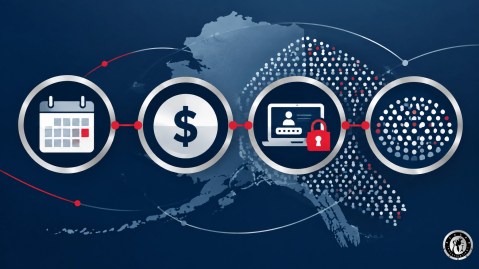
A public payment schedule. A fixed dollar amount. An online account. A large population expecting the same event.
That combination attracts fraud.
This is not a post about waiting for your payment or predicting when it will arrive. It is a closer look at how PFD fraud works, what account takeover can look like from your side, and what you can do before October 1.
Why the PFD Is an Attractive Target
The PFD creates several conditions that fraud schemes depend on.
1. The date is public
Payment dates are announced in advance. Everyone knows when attention will increase, when account activity will rise, and when Alaskans will be watching their bank accounts.
2. The amount is predictable
The 2026 payment is $1,200. A message referring to “your $1,200 payment” may sound believable because the amount is real and publicly reported.
3. The attack surface is digital
The money is connected to online applications and account information. A criminal does not necessarily need to steal a check from a mailbox. The target may be the myAlaska account, email address, password, or bank-routing information connected to the application.
4. Identity data is concentrated
A single program brings a large amount of identity and payment information together around one predictable event. That concentration gives criminals a broad audience and a reason to automate phishing, credential theft, and account takeover attempts.
5. People expect messages about the payment
You may reasonably expect a notice about your application, tax information, payment status, or account. That expectation makes a fraudulent message easier to believe.
A public date, known amount, online account, mass audience, and motivated recipients create nearly ideal conditions for a fraud campaign.
The Documented Case
A recent federal case shows how the account-takeover method can work.
According to the U.S. Attorney’s Office for the District of Alaska and reporting by Alaska Public Media, Adepoju Babatunde Salako, 33, of Philadelphia, pleaded guilty to seven counts of wire fraud connected to fraudulent PFD applications filed in 2022. He was sentenced in May 2026 to 18 months in federal prison.
The public record describes the method:
- Stolen personal identifying information was used.
- Existing myAlaska accounts were taken over.
- Email addresses were changed to accounts controlled by the defendant.
- Bank account and routing information were changed to redirect payments.
- A VPN was used to make some application activity appear to come from Alaska.
The most important part of the case is also the hopeful part: the Alaska Department of Revenue identified the fraudulent applications and denied them before any PFD funds were paid.
The loss was prevented. The verification process worked.
Alaska Investigations Group had no involvement in that matter. It is presented here only as a documented public case illustrating why account security and early self-checks matter.
What It Looks Like From Your Side
Account takeover does not always announce itself clearly. Watch for signs such as:
- You cannot sign in to your myAlaska account.
- You receive a password-reset email you did not request.
- Your PFD status shows as paid, but no money arrived in your account.
- A deposit appears in a bank account you do not recognize.
- You receive a notice about an address, email, or banking change you did not make.
- Your contact information or application details look different.
- A family member receives account messages that you never saw.
Some people do not discover a problem until they file again the following year. By then, the account history may be harder to reconstruct and memories may be less precise.
That is why an early self-check matters.
Do This Before October 1

Use this checklist before the first payment round:
-
Use a unique password.
Your myAlaska password should not be reused for email, banking, social media, or any other account. If it is reused, change it. -
Keep multi-factor authentication enabled.
Multi-factor authentication requires more than a password. After you enter your password, you must also verify through a second method, such as a code sent by text or phone. If someone obtains your password, MFA can prevent that person from completing the login. -
Never share your password.
Do not share it with a family member, friend, tax preparer, caller, or anyone claiming to represent the state. Do not share MFA codes either. -
Ignore unsolicited password messages.
The state does not send unsolicited emails or texts asking you to update your password or confirm personal information. Do not reply. Do not click. Go directly to the official site by typing the address yourself. -
Be cautious with “tax information” and 1099 messages.
The PFD Division has publicly warned about fraudulent emails using subjects such as “IMPORTANT TAX INFORMATION.” Do not open attachments or use the link in the message. Access pfd.alaska.gov or your myPFD account directly. -
Check your details yourself.
Log in directly and review your contact information, application status, and banking information before the payment run. -
Do not rely on an email notification.
Check your status through the official PFD website instead of waiting for a message. -
Talk with family members.
Shared email addresses, shared phones, saved passwords, and shared devices can create confusion and provide an easy path into the wrong account. Make sure each person understands which account belongs to them.
The Calls and Messages That Arrive With the Money
PFD season can also bring impersonation scams.
A caller may claim to be from a government agency, law enforcement, or your bank’s fraud department. The story may involve a warrant, bail, a suspicious transfer, or a “safety locker” designed to protect your money.
The Alaska Attorney General’s Office has warned that scammers direct victims to cryptocurrency ATMs. The rule is simple:
No legitimate business, bank, government agency, or law enforcement officer will ever direct you to feed cash into a crypto ATM.
They will not demand gift cards. They will not require cryptocurrency to resolve a legal or banking problem. They will not demand that you keep the situation secret from your family.
Hang up. Then call the agency or bank using a number you look up independently. Do not use the number provided by the caller.
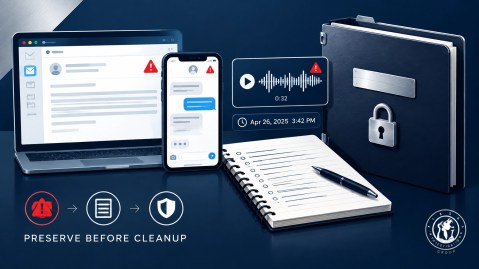
If Your Account Was Compromised, Preserve Before You Clean Up
Panic-deleting is one of the fastest ways to destroy your own evidence.
Do not:
- Delete emails, texts, or voicemails.
- Remove sender addresses, full headers, or timestamps.
- Wipe or reset the phone or computer involved.
- “Clean up” the account before documenting what changed.
- Continue communicating with a suspected scammer unnecessarily.
Instead:
- Preserve the full message, including the sender address, phone number, links, and timestamp.
- Save voicemail files and screenshots, but do not rely on screenshots alone.
- Write a chronology: when you noticed the issue, what changed, who you contacted, when you contacted them, and what each person said.
- Notify the PFD Division, your bank or credit union, the Alaska Attorney General’s consumer protection office, and the FTC’s identity theft resources.
- Consider placing a credit freeze with the major credit reporting agencies.
What actually holds up in court is not simply a dramatic screenshot. It is a clear, preserved, explainable record: original communications, account notices, dates, account changes, and a reliable chronology. For a related discussion of documentation and evidence, see AI in Private Investigations: What It Actually Does and What Still Holds Up in Court.
No investigator can guarantee that money will be recovered. No one can promise a particular outcome. A documented record gives you, your bank, the appropriate agency, and your counsel something solid to work from.
The Quiet Part: Why Timing Changes Things
A lump sum arriving on a known date can change household behavior.
People who have been difficult to locate may become easier to reach because claiming a payment requires account activity. Informal financial arrangements may also become disputes: money lent with a promise to repay “when the dividend comes,” PFDs divided informally among relatives, co-signed obligations, or handshake loans with nothing written down.
That is an observation about timing, not an invitation to catch anyone.
If you are lending money, co-signing, or agreeing to split a payment, write down the amount, date, parties, repayment terms, and signatures. Keep the record.
A written agreement can be the difference between a disagreement and a documented dispute. Any locating, observation, or documentation work must have a lawful basis. We decline work that does not.
Choosing a Legitimate Investigator in Alaska
Alaska does not have a statewide private investigator licensing regime, so there is no statewide license lookup that answers every diligence question. That makes methodology and credential verification especially important.
Before hiring an Alaska private investigator or private investigator in Anchorage, ask:
- Who will actually perform the work?
- What is that person’s experience?
- What methodology will be used?
- What documentation will you receive?
- How are legal boundaries handled?
- Will the investigator decline an improper request?
- What insurance is carried?
- How can references be independently verified?
A legitimate investigator will not access someone else’s account, device, password, or private communications without consent or legal process. A legitimate investigator will not claim law-enforcement authority or promise a result.
For the fuller version of this diligence list, look for “The 7 Questions to Answer Before You Hire Any Investigator in Alaska.”
Alaska Investigations Group provides confidential investigative services for matters involving identity theft, PFD fraud, disputes, and related documentation. The firm has more than 10 years of professional investigative experience and serves statewide Alaska except Fairbanks.
Licensed Private Investigations Agency in Anchorage, Alaska. License 1126
A Confidential Next Step
If your dividend has been targeted, your account has been compromised, or a PFD-related matter has become a dispute, a confidential consultation is available with no obligation.
Call (907) 232-4731, submit a request at https://akprivateinvestigator.com/request-a-consultation/, or email mrrems@protonmail.com.
Alaska Investigations Group does not promise outcomes. This article provides general information only and is not legal advice. Reporting suspected fraud to the appropriate agency is the reader’s responsibility. Readers should consult qualified legal, financial, banking, or law-enforcement professionals for advice concerning their specific circumstances.


