Asset Search in Alaska: Locating Property, Vehicles, Accounts, and PFDs for Attorneys

Asset location in Alaska has two distinct parts that are often conflated: finding the asset and reaching the asset.
The first is investigative work. The second is legal work, and only counsel can direct or execute that process. An asset search private investigator can identify, locate, corroborate, and document potential assets. The investigator cannot levy property, garnish an account, serve a writ, or determine what legal remedy applies.
This article addresses the investigative side. It explains what an Alaska asset search can reasonably establish and what documentation may support counsel’s next step. It does not provide legal advice, and it does not suggest that identifying an asset means the asset can be recovered.
The Alaska Problem
Alaska’s geography affects asset location at every stage.
The state operates as one court system, but its bench and bar are concentrated in a limited number of population centers. Attorneys routinely encounter assets, records, businesses, residences, and counterparties in communities they may never visit and cannot reach on an ordinary schedule.
Dozens of communities are accessible only by small aircraft, boat, or ferry. Weather can ground flights, delay marine transportation, and change the cost and feasibility of field work. A records office, storage facility, marina, residence, or business may require planning around transportation windows and daylight rather than a conventional urban appointment.
Winter conditions create a separate documentation issue. In December and January, field work that might occupy a full summer day can compress into a few usable hours. Photography, visibility, travel safety, and the ability to document a moving asset may all change with the season.
Records access also varies by level and location. Recorder’s office filings, judicial records, municipal records, tax records, agency records, and business filings may involve different systems, fees, response times, and limitations. A record that is current in one jurisdiction may be stale or incomplete in another.
Mailing arrangements require particular caution. A post office box may be located hundreds of miles from a physical residence. A commercial mail receiving service may function as a primary mailing address. A valid address on paper does not necessarily identify where a person, vehicle, vessel, or business actually is.
Alaska also has no statewide private investigator licensing regime. There is no statewide license lookup that resolves the diligence question for counsel. The burden therefore rests with the retaining attorney to ask how the work is performed, what sources are used, how findings are corroborated, and what documentation will be delivered.

What Can Be Located
Real Property of Record
Real property research may involve Alaska Recorder’s Office filings, municipal records, tax records, recorded liens, entity ownership information, and related public filings.
The documentation limit is important. Alaska contains substantial remote, unplatted, and difficult-to-access land. Property may also be held through entities or associated with Native corporation land and allotment considerations that require careful jurisdictional and legal analysis. A recorded interest may establish ownership or an interest of record, but it does not establish current possession, value, marketability, or availability for execution.
Vehicles, Aircraft, and Vessels
Vehicles, aircraft, and vessels are frequently among the most significant movable assets connected to an Alaska matter.
Vehicle title and registration information follows specific administrative paths. Aircraft and vessel research involves different registration systems and may require additional identity, ownership, location, and status analysis. Aircraft and vessels are generally more difficult to locate physically than ordinary vehicles.
A registration record is not a physical locate. A physical locate of a moving asset is a documentation problem as well as a records problem. The investigator must distinguish between a recorded owner, a last-known registration address, a reported location, and an observed location on a particular date and time.
Business Interests
Registered and unregistered business interests may be researched through entity filings, registered agent records, assumed business names, professional licenses, municipal records, and public-facing business information.
Each source has limits. An entity filing may show a registered agent without proving operational control. An assumed business name may not identify all related interests. A professional license may establish authorization to work in a field without establishing current income, ownership, or business assets.
Financial Accounts
A third party generally cannot determine the balance of a private financial account through ordinary public research. Banking information is not treated as an ordinary public-record asset.
An investigator must not access a financial account or obtain confidential banking information without lawful authorization. Lawful process directed to a financial institution is counsel’s step, not the investigator’s. An asset search may identify financial relationships indirectly through lawful sources, but it cannot substitute for discovery, subpoena, court process, or other legal authority.
Income and Employment
Income and employment research may involve employer records available through lawful sources, professional licensing information, business ownership records, public filings, and documented field observations.
Seasonal work, cash-based work, self-employment, remote contracting, and employment across multiple communities can leave a thinner paper trail than comparable work in the lower 48. A reported employer or occupation should therefore be classified as confirmed, unverified, or inferred unless independently corroborated.
The PFD as an Alaska Asset
The Permanent Fund Dividend is a distinct Alaska asset class because it is paid under a public program, follows a published payment schedule, and applies to a defined population.
Under AS 43.23.065, a Permanent Fund Dividend may be subject to specified levy, execution, garnishment, attachment, or other collection procedures, subject to statutory exemptions and exceptions. The specific claim, priority, exemption, and procedure must be confirmed by counsel under the current statute.
Priority Matters
Child-support claims receive statutory priority in the applicable withholding and collection process, subject to the governing law and current agency procedures. Under AS 25.27.250, the Child Support Services Agency may issue an order to withhold and deliver. That order generally has priority over other attachments, executions, garnishments, or legal processes against the same property, subject to applicable law and any court order.
Other creditors generally proceed through a writ of execution issued through the court. The Alaska Court System publishes forms and instructions addressing execution on a Permanent Fund Dividend, including CIV-502, the writ of execution and notice of levy on a Permanent Fund Dividend; CIV-503, the instructions and booklet concerning execution on a PFD; and CIV-570, the request to return a PFD taken by mistake. The forms describe procedural steps; they do not determine whether a particular creditor is entitled to proceed.
The Alaska Court System also publishes PFD attachment lists. Those lists include successful and unsuccessful attempts to take dividends by writ of execution, but they do not include every category of government or administrative attachment. Counsel should treat the lists as published administrative guidance, not as a complete account of every possible claim affecting a dividend.
Timing and Exemptions
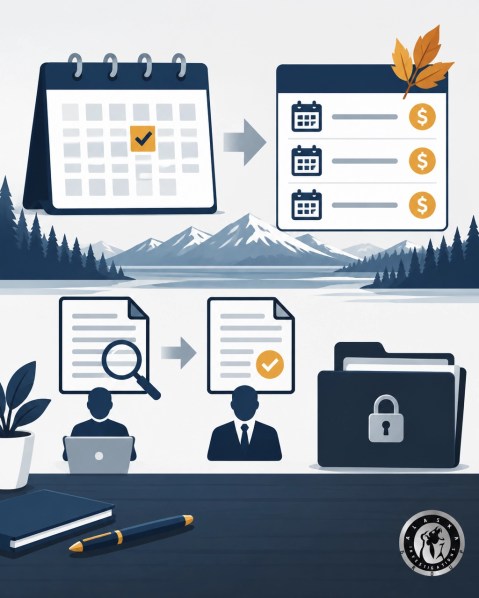
For a writ directed to the current year’s dividend, the Alaska Court System’s current instructions state that the Department of Revenue will not accept service before April 1 of that year, subject to the instructions and any applicable calendar adjustment. Counsel should verify the current procedure and deadline before relying on it. A writ of execution for a current-year dividend ordinarily concerns that year’s dividend rather than prior years. The applicable receipt deadline and processing cycle should be confirmed from the current Court System and Department of Revenue instructions.
The practical question is therefore not simply whether a dividend exists. It is whether the relevant order or process will be in place within the applicable administrative window. A dividend identified after the relevant cycle may not be reachable until a later cycle, depending on the claim and procedure.
AS 43.23.065 contains a statutory exemption and exceptions to that exemption, including treatment that differs for certain priority obligations such as child support. Counsel should verify the current statute and its application before relying on it. The applicable exemption and priority analysis are fact-specific. This article does not state an exemption amount and should not be used to determine the amount subject to a particular claim.
The investigator’s role is limited to identifying, corroborating, documenting, and reporting information. The investigator does not prepare or serve the writ, direct the Department of Revenue, or perform the legal step.
Digital and Public-Facing Information
Lawfully accessible digital sources may help identify addresses, business affiliations, vehicles, relationships, and other leads. The firm’s separate article, “AI in Private Investigations: What It Actually Does, and What Still Holds Up in Court,” addresses digital intelligence, provenance, authentication, and the limits of automated research.
What the Engagement Produces
A written scope may address:
- The assets or categories at issue
- The relevant jurisdiction
- The lawful basis for the work
- The sources and methods to be used
- What will and will not be reported
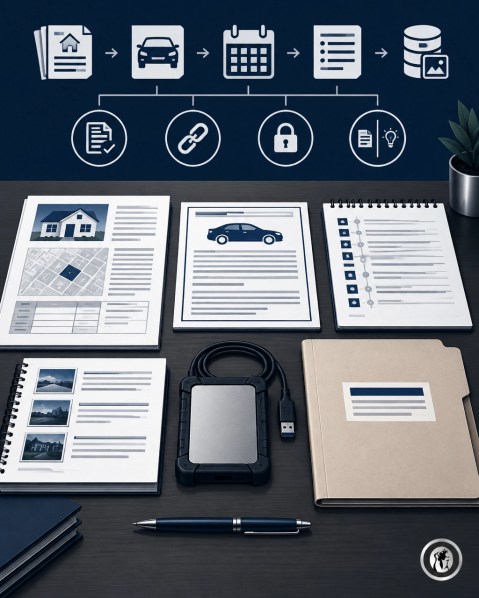
A reliable deliverable should provide corroboration rather than a single-source hit. Each identified asset should be compared with at least one independent source where practicable, with the source identified.
The report should clearly separate:
- Confirmed fact
- Unverified lead
- Inference or investigative assessment
That distinction should appear in the deliverable itself.
A dated chronology can identify the source and acquisition method for each material item.
Copies should be legible. Original media should be retained without alteration. Records should have item-level references. The named investigator should be able to explain the method, source, acquisition process, and provenance if called to testify.
Limitations must be explicit. The report should identify what could not be determined, what information may be stale, what could not be corroborated, and what would require legal process. A deliverable that conceals its own limitations is worse than useless to counsel.
Privilege and Scope
Where privilege or work-product protection is a consideration, counsel should evaluate whether the investigator should be engaged through counsel.
The scope letter should define the lawful basis, objectives, boundaries, reporting recipient, and permissible methods. Written instructions should address contacts, pretext, access to premises, communications with represented parties, and anything involving a protected relationship.
The investigator should ask counsel to clarify the privilege, work-product, and legal-basis issues before work begins; those determinations belong to counsel.
A vendor that does not ask how the work is authorized is a risk to the matter, not a resource.
Alaska Investigations Group declines assignments without an identified lawful basis.
Standards and Hard Lines
The firm will not:
- Access a financial or private account without lawful authorization
- Obtain records by misrepresenting legal authority
- Conduct surveillance or install a device without a lawful basis
- Contact a represented party without counsel’s direction
- Characterize an unevidenced theory as a finding
These requests are declined. That is a feature of the service, not a limitation.
Reports are prepared for professional and legal review. Alaska Investigations Group is not a law firm, provides no legal advice, and does not provide legal representation.
Alaska Diligence Questions
Before directing an Alaska private investigator, counsel should ask:
- Who will actually perform the work, and what is that person’s relevant experience?
- What methodology and sources will be used?
- What documentation standard applies?
- How will original media be preserved and transferred?
- Will the vendor decline an improper request?
- What insurance is carried?
- How can references and credentials be verified?
- How will field work be planned around transportation, weather, seasonal daylight, and remote access?
Because Alaska has no statewide licensing regime, credential verification requires more diligence than it may in a state with a licensing board.
Working With Alaska Investigations Group
Alaska Investigations Group provides asset location, vehicle locating, people locating, background investigations, digital intelligence, litigation support, and research projects. Documentation is prepared for professional and legal review, with limitations disclosed.
The firm serves attorneys, law firms, businesses, insurance companies, government entities, and private parties. Coverage is statewide throughout Alaska EXCEPT FAIRBANKS, with nationwide and international support when a matter extends beyond the state. Consultations are available 24/7.
Alaska Investigations Group has more than 10 years of professional investigative experience.
Licensed Private Investigations Agency in Anchorage, Alaska. License 1126. Serving statewide except Fairbanks.
The firm does not promise outcomes and does not represent that an identified asset will be recovered, reached, attached, or available for execution. Findings are reported factually, with the supporting documentation and limitations stated.
Confidential Consultation
For a confidential consultation to scope an asset-location matter, contact Alaska Investigations Group:
- Download the checklist: Evidence Admissibility & Chain-of-Custody Checklist for Alaska Cases
- Phone: (907) 232-4731
- Consultation: Request a consultation
- Email: mrrems@protonmail.com
Disclaimer
1. General Information
This article provides general procedural information for attorneys and law firms. It is not legal advice and is not a substitute for independent legal research, professional judgment, or analysis of a specific matter.
2. No Legal Representation
Alaska Investigations Group is not a law firm and does not provide legal advice, legal representation, legal opinions, or litigation strategy. Counsel remains responsible for determining applicable law, procedure, priority, exemption, service, and enforcement requirements.
3. Sources and Currency
Statutes, regulations, court forms, administrative guidance, records, and procedures may change. References to AS 43.23.065, AS 25.27.250, Alaska Court System forms CIV-502, CIV-503, and CIV-570, and published PFD attachment lists are provided as procedural references only. The cited materials do not establish how a court or agency will apply the law to a particular matter.
4. No Outcome Guarantee
Identification of property, vehicles, accounts, employment, business interests, or a Permanent Fund Dividend does not guarantee recovery, attachment, execution, payment, admissibility, or access. Findings may be incomplete, stale, unavailable, or subject to legal process.
5. Professional Review
All investigative findings should be reviewed by qualified counsel before use in litigation, collection activity, negotiation, or any other legal matter.


